
May 6, 2025
On May 4, 2025, President Donald J. Trump announced via his Truth Social platform a directive to reopen and expand Alcatraz Federal Penitentiary, the historic island prison in San Francisco Bay, to detain “America’s most ruthless and violent Offenders.” The order, directed at the Federal Bureau of Prisons (BOP), Department of Justice (DOJ), FBI, and Department of Homeland Security (DHS), aims to rebuild the facility as a beacon of “Law, Order, and JUSTICE.” Yet, with minimal details and significant obstacles, is this a serious proposal or a symbolic gesture? Ashes on Air explores the plan’s intent, feasibility, and implications, particularly for workers, using primary and credible sources.
The Directive: Bold but Vague
Trump’s Truth Social post, issued at 6:55 PM on May 4, 2025, calls for a “substantially enlarged and rebuilt ALCATRAZ” to house violent offenders, lambasting “radicalized judges” for hindering deportations of illegal immigrants. “No longer will we tolerate these Serial Offenders who spread filth, bloodshed, and mayhem,” he wrote, concluding, “We will, MAKE AMERICA GREAT AGAIN!”. However, speaking to reporters that evening, Trump described it as “just an idea” sparked by judicial pushback on his immigration policies, suggesting a lack of firm commitment.
The Federal Bureau of Prisons (BOP), the DOJ agency overseeing 120 federal correctional facilities and 156,254 inmates, confirmed to the Associated Press it “will comply with all Presidential Orders” but offered no specifics on implementation. No statements from the DOJ, DHS, or FBI have emerged, and the National Park Service (NPS), which has managed Alcatraz since 1972, remains silent. This absence of agency detail, paired with Trump’s casual remark, fuels doubts about the plan’s seriousness.

Historical Context: Alcatraz’s Past and Closure
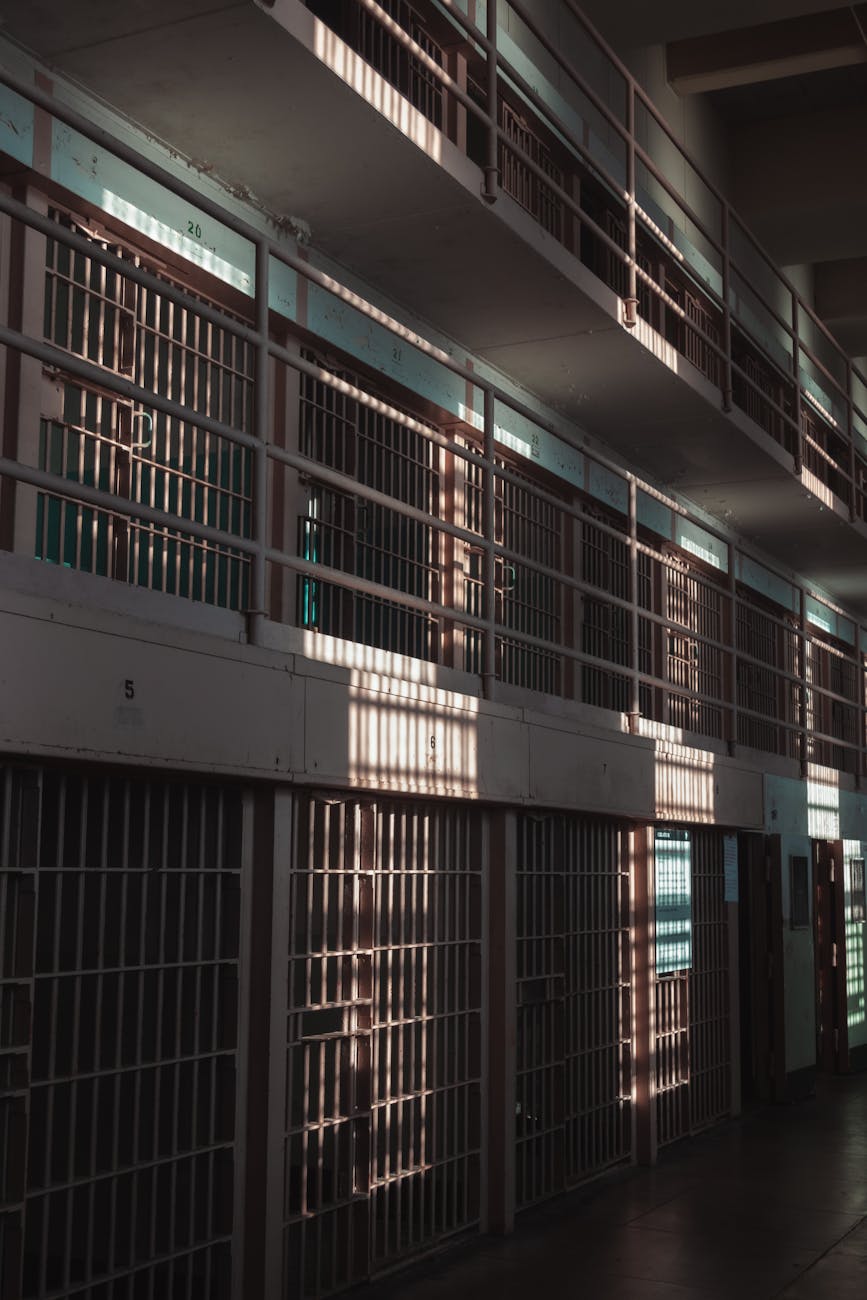
Alcatraz, operational from 1934 to 1963, was a maximum-security federal penitentiary for “incorrigible” inmates like Al Capone. Housing about 260–275 prisoners (less than 1% of the federal prison population), its island location—1.25 miles from San Francisco—ensured near-impossible escapes due to frigid, turbulent waters. Of 36 men in 14 escape attempts, most were recaptured or presumed drowned.
The BOP closed Alcatraz in 1963 because its operating costs were nearly three times higher than other federal prisons, with a 1959 daily per capita cost of $10.10 versus $3–4 elsewhere. Maintenance and restoration were estimated at $3–5 million (roughly $31–52 million today). Since 1973, the NPS has operated Alcatraz as part of the Golden Gate National Recreation Area, hosting over 1.4 million visitors annually, generating significant revenue.
The Plan: Ambitious but Undefined
Trump’s directive envisions a rebuilt Alcatraz to detain violent offenders, but no official documents detail funding, construction, or capacity. The BOP’s historical records note Alcatraz’s capacity at around 300 inmates, but an “enlarged” facility would require modern upgrades—earthquake-proofing, accessibility compliance, and advanced security. The NPS’s jurisdiction, established by Congress in 1972, necessitates legislative action to return control to the BOP, a step unaddressed by Trump or agencies.
No cost estimates accompany the plan, but historical data suggests a steep price. Rebuilding could cost $235–370 million, with annual operating costs of $60–75 million, driven by the need to ship all supplies, including water, to the island. The BOP, already strained by budget constraints and closing facilities due to staffing shortages, faces challenges. Trump’s proposed DOJ budget cuts further cloud funding prospects.
Utilization: A Supermax or Symbolic Move?
The rebuilt Alcatraz would likely function as a maximum-security prison, akin to the United States Penitentiary, Administrative Maximum Facility (ADX) in Florence, Colorado—the federal “Supermax” housing high-profile inmates like Joaquín “El Chapo” Guzmán under 23-hour solitary confinement. Trump’s focus on “ruthless” criminals and illegal immigrants ties to his broader policies, including deportations to El Salvador and a Guantanamo Bay detention plan for 30,000 migrants. However, with 16 existing high-security federal prisons, including ADX Florence, Alcatraz’s necessity is questionable. Its iconic status may serve as a psychological deterrent or political symbol rather than a practical solution.
Timeline: Years in the Making, If At All
No timeline has been specified. Rebuilding a 1930s facility, resolving legal jurisdiction, securing congressional funding, and meeting modern standards could take years. Closing Alcatraz in 1963 required extensive planning, and recent prison projects, like Guantanamo expansions, faced decade-long delays. Without a concrete proposal or agency coordination, implementation remains speculative.

Worker Conditions: An Overlooked Challenge
The plan’s emphasis on inmates ignores the workers who would operate Alcatraz. Historically, BOP staff lived on-site or commuted by boat, facing isolation and logistical hurdles. A modern facility would demand safe transportation, housing, and mental health support for guards managing high-risk inmates. The BOP’s staffing crisis—50% of facilities are understaffed—could complicate recruitment for a remote, high-stress post. High operating costs, comparable to Guantanamo’s $13 million per prisoner, risk diverting funds from salaries or safety measures, potentially compromising worker conditions. No agency has addressed these issues, a critical oversight.
Feasibility and Criticism
The proposal faces significant barriers:
- Cost: Hundreds of millions in upfront and ongoing expenses, with no funding plan.
- Jurisdiction: NPS control requires congressional action.
- Redundancy: Facilities like ADX Florence already serve the same purpose.
- Politics: Critics, including former House Speaker Nancy Pelosi, call it “not a serious one,” citing Alcatraz’s tourism value.
Trump’s rhetoric links Alcatraz to his judicial frustrations, suggesting it’s partly a reaction to legal constraints on his authority. The lack of transparency—no cost estimates, no worker protections—undermines credibility.
More Symbol than Substance?
Trump’s Alcatraz plan is a striking proposal, capitalizing on the prison’s notorious reputation to project toughness. Yet, its vagueness, coupled with financial, legal, and logistical hurdles, suggests it’s more a political gesture than a feasible project. For workers, the oversight of conditions is concerning, given the BOP’s challenges. Taxpayers deserve clarity on costs and benefits, not just bold claims. As of May 6, 2025, Alcatraz remains a tourist destination, and without detailed plans, it’s likely to stay that way. Watch for updates, but scrutinize promises lacking substance.
Is this justice or optics? Share your thoughts below.
Sources:
- Federal Bureau of Prisons, “Alcatraz History” and “BOP Statistics”.
- National Park Service, “Alcatraz Island”.
- Associated Press, “Trump Orders Bureau of Prisons to Reopen Alcatraz for Violent Offenders,” May 4, 2025.
- CNN, “Trump Says He Is Directing Bureau of Prisons to Reopen Alcatraz,” May 4, 2025.
- The Washington Post, “Trump Wants to Reopen Alcatraz, a Notorious U.S. Prison,” May 5, 2025.
- NBC News, “Trump Says He Will Reopen ‘Enlarged and Rebuilt’ Alcatraz Prison,” May 4, 2025.
- TIME, “What to Know About Trump’s Plan to Reopen Alcatraz,” May 5, 2025.
- The New York Times, “The Cost of Running Guantánamo Bay: $13 Million Per Prisoner,” September 16, 2019.




Leave a Reply