
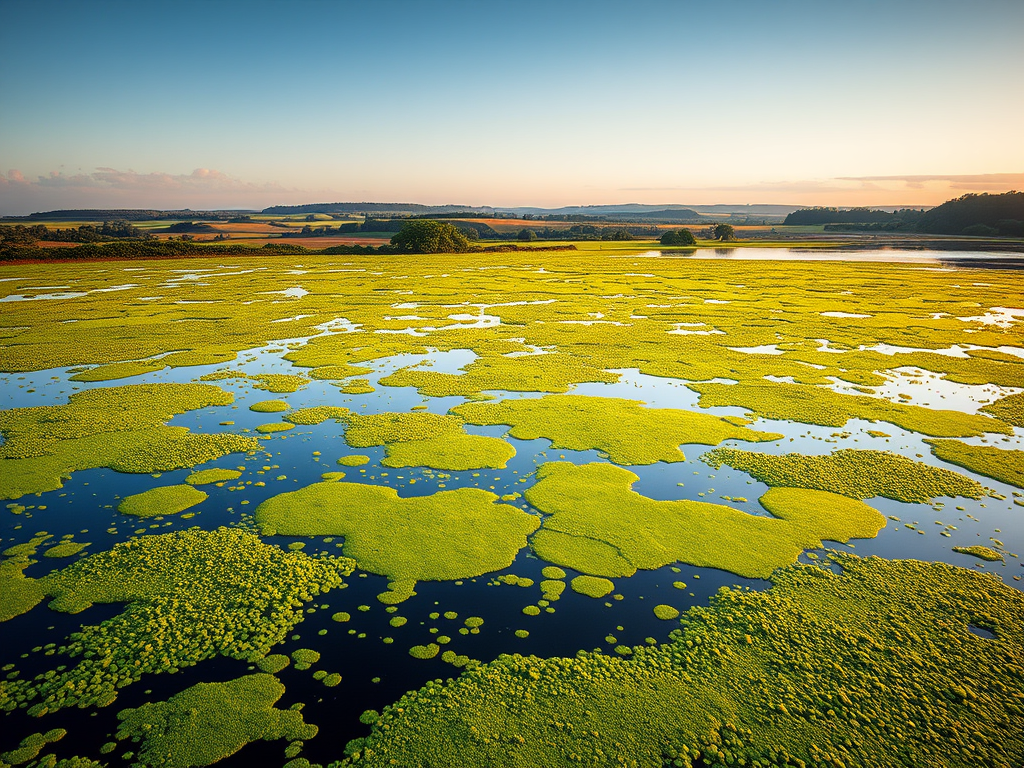
Lough Neagh, the largest freshwater lake in the British Isles, is undergoing an ecological crisis driven by excessive nutrient pollution, resulting in recurring cyanobacterial (blue-green algae) blooms. This paper presents a comprehensive strategy for Ireland to mitigate the crisis by integrating algae-based wastewater treatment with existing environmental policy tools, infrastructure upgrades, and public-private investment. It draws from recent European research, funding programs, and real-world algae pilot projects to outline a feasible path toward water quality restoration, biodiversity protection, and safe drinking water access. It also outlines how communities and concerned citizens can push for policy change, support local action, and become part of the solution.
The Problem with Lough Neagh
Lough Neagh is experiencing widespread eutrophication, largely attributed to phosphorus and nitrogen runoff from agricultural sources and inadequately treated wastewater. The resulting toxic algae blooms pose escalating risks to biodiversity, drinking water supplies, tourism, and public health. Traditional mitigation methods—mechanical dredging, chemical treatment, or farming restrictions—have not delivered sustainable recovery.
Why Algae Works
Microalgae like Chlorella and Scenedesmus are effective bio-remediators, absorbing nitrogen and phosphorus from polluted water. In raceway ponds, photobioreactors, or biofilm panels, they remove nutrients before water enters Lough Neagh. Studies confirm high removal rates with reusable biomass for feed, biofuel, and fertilizer.
European Proof: Algae in Action
Projects like ALG-AD (UK/FR/BE), LIFE ALGAECAN (Spain), and Gross-Wen Technologies (US/EU) show algae systems work at farm and municipal scales. They reduce nutrient loads, clean wastewater, and create circular economies from waste.
Why Ireland Is a Fit
Ireland has a dense agri-food sector, access to EU environmental funding, publicly owned water infrastructure, and national climate and water directives like the Water Framework Directive and Climate Action Plan. Ideal deployment sites include wastewater treatment plants, farm runoff zones, and food processing facilities.
Cost and Funding
Pilot projects typically range from €50,000 to €150,000, while mid-scale implementations could cost between €500,000 and €2 million. Funding can come from the EU LIFE Programme, Horizon Europe (Cluster 6), EPA Green Enterprise Fund, CAP Eco-Schemes, Irish Water and local authorities, and private agri-sector partnerships.
What are Some Other Options?
Wetland Restoration
Wetlands provide a natural, passive method of filtering excess nutrients, offering multiple co-benefits such as habitat creation, flood buffering, and carbon sequestration. While they require significant land and time to mature, their long-term ecological benefits and resilience to climate change make wetlands indispensable in an integrated water quality strategy.
Chemical Flocculants
Chemical treatments rapidly bind phosphorus and sediments, clearing water and suppressing blooms quickly. Though not a long-term solution, they can be effective for emergency bloom control or in conjunction with other strategies. The quick response time is a benefit where immediate improvements are necessary.
Mechanical Dredging
Dredging physically removes nutrient-rich sediments that perpetuate internal phosphorus cycling, addressing legacy pollution. While expensive and disruptive, this method can reset the nutrient baseline when carefully managed, especially when combined with controls on new nutrient inputs.
Farm Runoff Regulation
Controlling nutrient runoff at the source through regulations and incentives promotes sustainable agriculture. Benefits include improved soil health, better crop yields, and reduced downstream pollution. Programs such as Ireland’s Agri-Environment schemes encourage these practices, although uptake requires ongoing support and engagement with farming communities.
Sewage Upgrades
Modernizing wastewater treatment plants to tertiary treatment drastically lowers nutrient discharge, directly benefiting water quality and public health. Though costly and resource-intensive, these upgrades provide systemic, long-lasting improvements and ensure compliance with EU water standards. Infrastructure modernization also offers opportunities to integrate innovative algae systems.
Floating Wetlands
Floating wetlands can be quickly deployed in strategic areas to absorb nutrients and provide habitat diversity. Their aesthetic value and ease of installation make them a useful supplement, especially in urban or recreational water bodies, although their nutrient removal capacity is limited.
Precision Agriculture
Advanced technologies optimize fertilizer use and minimize runoff, boosting efficiency and reducing environmental impacts. The benefits include cost savings for farmers and decreased nutrient loading. Widespread adoption depends on accessible training and financial incentives but aligns well with climate-smart agriculture goals.
Comparison Table
| Method | Nutrient Removal | Long-Term Viability | Cost | Co-benefits | Risks/Limitations |
|---|---|---|---|---|---|
| Algae-based treatment | High | High | Medium | Biomass reuse | Needs space, operator training |
| Wetland restoration | Moderate | High | Low | Flood buffer, habitat, carbon sequestration | Land intensive, slow to mature |
| Chemical flocculants | High (short-term) | Low | Medium | Rapid bloom suppression | Potential toxicity, recurring cost |
| Mechanical dredging | Low (preventative) | Moderate | High | Removes legacy phosphorus | Expensive, ecosystem disruption |
| Farm regulations | Moderate-High | High | Low | Improved soil health, source control | Political resistance, enforcement |
| Sewage upgrades | High | High | High | Public health, infrastructure | Capital-intensive, long timeline |
| Floating wetlands | Moderate | Moderate | Low | Habitat, aesthetics | Small scale, seasonal maintenance |
| Precision ag tech | Moderate | High | Medium | Farm efficiency, climate-smart | Adoption barriers, cost |
A National Plan for Ireland
The best path forward integrates these options into a cohesive, multi-faceted approach. Pilot algae deployments should begin immediately near high-priority inflows, paired with wetland restoration where possible. Infrastructure modernization through sewage upgrades must be planned and funded to reduce wastewater nutrient loads systemically. Agricultural runoff controls and precision agriculture tools should be supported and incentivized to reduce source pollution. Floating wetlands can serve as supplementary, targeted interventions. Building this network requires coordination across government agencies, local authorities, farmers, scientists, and communities.
Risks and Challenges
While algae-based treatment offers promising benefits, challenges remain. These systems need regular maintenance, skilled operators, and sustainable funding to perform reliably. Scaling beyond pilot projects demands infrastructure investment and ongoing monitoring. Proper biomass management is critical to prevent unintended pollution. Similarly, plumbing upgrades and farm runoff controls require political will and stakeholder cooperation, as resistance and costs can slow progress. Transparent communication and public involvement are essential to overcome these hurdles.
Timeline and Milestones
To maintain momentum and accountability, a clear timeline is vital:
- Immediate launch of small-scale algae pilots and wetland restorations (2025–26).
- Evaluation and phased scaling to medium systems (2027).
- Integration with farm runoff controls and wastewater infrastructure upgrades (2028–29).
- Full deployment of connected algae and natural systems across the Lough Neagh catchment with real-time monitoring and public reporting (2030).
Call to Action
The future of Lough Neagh depends partly on public pressure and involvement:
- Engage with your local representatives about algae and nutrient reduction initiatives.
- Support river trusts and citizen science programs.
- Share observations and data about water quality issues.
- Promote awareness in your community, schools, and media.
- Stay updated on environmental funding opportunities and public consultations.
Monitoring and Metrics
Progress should be tracked by:
- Nutrient concentration reductions in inflows and lake waters.
- Frequency and severity of toxic algae blooms.
- Water clarity and oxygen level improvements.
- Biodiversity recovery indicators.
- Levels of community participation in monitoring and restoration.
Consistent data collection and transparent reporting will build trust and guide adaptive management.
Who Needs to Be Involved
Success requires collaboration among:
- Local authorities (Armagh, Antrim, Tyrone)
- NI Environment Agency and Irish EPA
- Irish Water and Northern Ireland Water
- Farmers and agri-cooperatives
- EU environmental and funding bodies
- Universities, research institutions, and technical colleges
The Bottom Line
The scientific knowledge and funding streams to fix Lough Neagh exist. The infrastructure and agricultural practices need updating, but algae-based treatment offers a scalable, innovative solution. The key is integrating all these approaches with strong political will and community engagement. This is about public health, sustainable ecosystems, and Ireland’s environmental legacy. The moment to act is now.
Further Resources and Ways to Get Involved:
- Lough Neagh Partnership — www.loughneaghpartnership.org
- EPA Ireland Water Quality Reports — www.epa.ie
- EU LIFE Programme — ec.europa.eu/easme/en/life
- Horizon Europe Cluster 6 — ec.europa.eu/info/horizon-europe
- Irish Water — www.water.ie
- River Trusts and Catchment Partnerships (local community groups)
- Freshwater Watch Citizen Science — freshwaterwatch.thewaterhub.org
- Irish Climate Action Network — climateactionnetwork.ie
For media inquiries, or data requests contact: Ashes on our linked contact page





























 Ashes on Air
Thank you for taking the time to share your thoughts. Your voice is important to us, and we truly value your input. Whether you have a question, a suggestion, or simply want to share your perspective, we’re excited to hear from you. Let’s keep the conversation going and work together to make a positive impact on our community. Looking forward to your comments!