
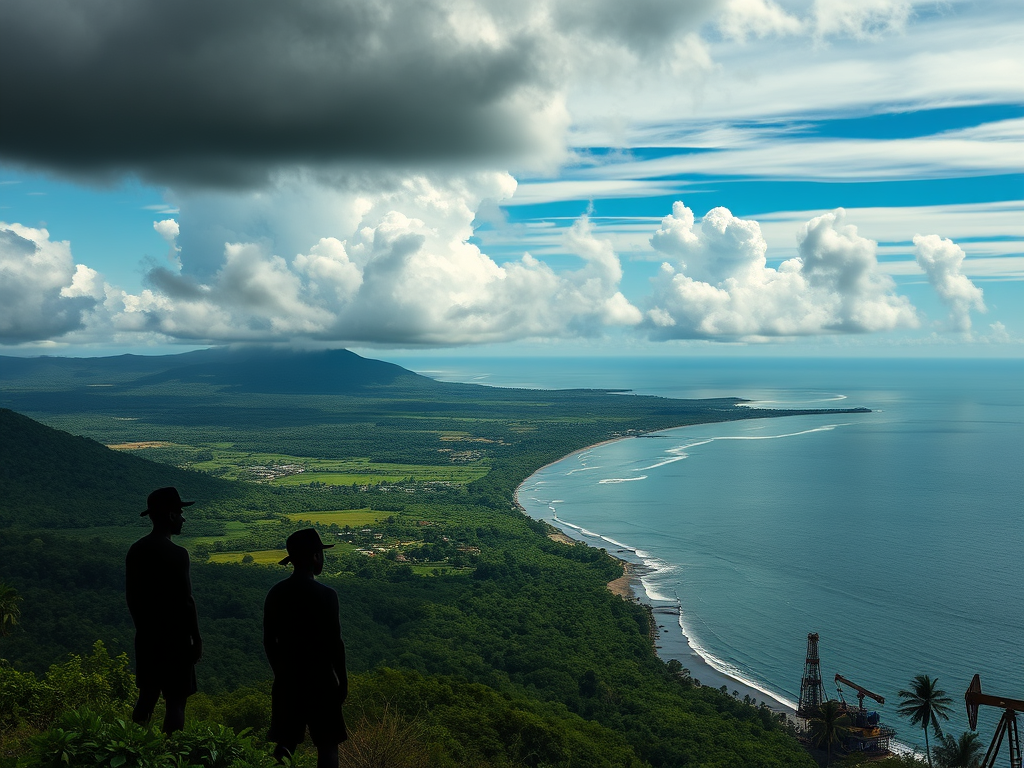
The Essequibo dispute pits Guyana against Venezuela over a 159,500 km² oil-rich region. Explore its history, indigenous stakes, and risks of conflict in South America.
May 12th, 2025
On March 1, 2025, a Venezuelan naval vessel entered Guyana’s exclusive economic zone (EEZ), approaching the Liza Destiny oil platform and requesting operational data, according to the Center for Strategic and International Studies (CSIS). The incident, 200 km from the disputed border, prompted Guyana to deploy its military and condemn the action. In Essequibo’s indigenous villages, Arawak and Makushi residents expressed concern that their lands could face conflict. The Essequibo dispute, a 150-year-old territorial disagreement over a 159,500 km² region, has escalated due to recent oil discoveries, raising fears of military confrontation.

How the Essequibo Dispute Began: A Colonial Clash
The Essequibo dispute originated in the 19th century, when Spanish-controlled Venezuela and British Guiana competed for the resource-rich Essequibo region, valued for gold and timber. In 1899, an international tribunal issued the Paris Arbitral Award, assigning the territory to British Guiana (now Guyana). Venezuela initially accepted the ruling, and the region’s limited economic significance kept tensions low, reports the BISI research institute. In 1962, Venezuela rejected the award as biased, citing colonial-era irregularities. The 1966 Geneva Agreement, signed by Venezuela, the UK, and Guyana, committed both nations to negotiate a resolution, maintaining diplomatic stability for decades. Venezuela continues to claim Essequibo as “Guayana Esequiba.”
Essequibo’s Oil Crisis: Guyana vs. Venezuela Today
The discovery of 11 billion barrels of oil by ExxonMobil in 2015 has intensified the Guyana-Venezuela conflict, ending decades of relative calm. Guyana’s economy has grown to $16 billion in 2024, with oil production expected to reach 1.2 million barrels daily by 2027, per CSIS. Venezuela, grappling with a $100 billion GDP and hyperinflation, views Essequibo’s oil as critical, especially under President Nicolás Maduro’s leadership, which has used the dispute to bolster domestic support amid economic crises, according to The Guardian.
Key events have heightened tensions:
- 2023 Referendum: Venezuela held a referendum, reporting 95% support for annexing Essequibo, though low turnout raised questions about its legitimacy, per Al Jazeera.
- 2024 Law: Maduro’s government designated Essequibo a Venezuelan state governed from Tumeremo, a move Guyana called illegal, per Stabroek News.
- 2025 Naval Incursion: The March 2025 incident, followed by Venezuela’s televised military exercises, threatened Guyana’s oil operations.
- ICJ Ruling: On May 1, 2025, the International Court of Justice (ICJ) barred Venezuela from holding elections in Essequibo, but Maduro rejected the ruling, escalating the dispute, reports Guyana Chronicle.
The oil wealth, Maduro’s political strategy, and geopolitical divides—Guyana’s U.S. and UK allies versus Venezuela’s Russia and China supporters—have shifted the dispute from diplomatic talks to potential conflict, ending a century of relative peace.

Voices of Essequibo: Pride, Fear, and Desperation
The dispute has evoked strong sentiments:
- Guyana: Guyanese citizens support President Irfaan Ali’s pursuit of an ICJ ruling to affirm the 1899 award. In Surama, residents held prayer services in 2023, fearing Venezuelan aggression, a stark contrast to decades of stable administration, per BISI. Many worry conflict could jeopardize oil-driven prosperity.
- Venezuela: Venezuelans, taught that Essequibo is rightfully theirs, express nationalism through public displays like Caracas murals stating “Essequibo es nuestro.” The 2023 referendum reflected economic desperation, though some citizens abstained, viewing the claim as settled, reports The Guardian.
- Indigenous Communities: Essequibo’s 125,000 Arawak, Makushi, and other indigenous residents rely on the region’s rainforests and rivers for traditional farming, hunting, and fishing. In Wakapau, toshao Andre Mohabir told Stabroek News, “This is Guyana,” but fears annexation or oil-related disruption could destroy their heritage. In Moruca, indigenous leaders report growing concern over Venezuelan gang activity near borders, a new threat after years of peace. They seek inclusion in talks to protect their lands and culture.
What If the Essequibo Conflict Ignites War?
The dispute, once managed diplomatically, now risks escalation:
- Military Conflict: Venezuela’s larger military could target border areas like Ankoko Island, prompting Guyana to seek U.S. and UK support, potentially drawing in Russia and China, per CSIS, destabilizing South America.
- Economic Impact: An attack could halt Guyana’s oil industry, crippling its $16 billion economy. Venezuela would face stricter sanctions, deepening poverty for 28 million citizens, reports BISI.
- Indigenous Displacement: Conflict could displace Essequibo’s 125,000 indigenous residents, with illegal mining and crime damaging rainforests and cultural sites, per BISI.
- Regional Instability: Brazil and CARICOM nations could be affected, undermining Latin America’s peace and encouraging other territorial disputes.
Can Peace Save Essequibo? A Diplomatic Hope
Diplomacy, which preserved peace for decades via the 1966 Geneva Agreement, offers a path forward:
- ICJ Process: Guyana’s case to validate the 1899 award, ongoing at the ICJ, could resolve the border by 2027. Venezuela’s compliance, though unlikely without incentives like Chinese debt relief, is critical, per Guyana Chronicle.
- Mediated Talks: Brazil and CARICOM could facilitate negotiations under the Geneva Agreement, focusing on joint initiatives like environmental protection or trade, reports CSIS.
- Indigenous Inclusion: A trilateral council with Arawak, Makushi, and other indigenous leaders must ensure land rights and cultural preservation, drawing on models like Colombia-Panama indigenous talks. Such a council could oversee sustainable development, protecting Essequibo’s 125,000 indigenous residents from oil and mining impacts, per BISI.
- De-escalation: A Brazil-monitored demilitarized zone could prevent incidents like the 2025 incursion, fostering stability.
Essequibo Crisis FAQ: Key Questions Answered
Why is Essequibo disputed?
The Essequibo dispute arises from colonial borders, with Guyana claiming the region under the 1899 Arbitral Award and Venezuela asserting historical Spanish rights.
Why is the Essequibo dispute escalating now?
Oil discoveries since 2015, Venezuela’s economic crisis, and President Maduro’s political strategy have intensified tensions, ending decades of diplomatic restraint facilitated by the 1966 Geneva Agreement.
What’s at stake in the Guyana-Venezuela conflict?
Essequibo’s 11 billion barrels of oil drive Guyana’s economy and Venezuela’s ambitions. Unresolved, it risks war, indigenous displacement, and regional instability.
How do indigenous communities view the Essequibo dispute?
Arawak, Makushi, and other indigenous groups, totaling 125,000, fear losing land and heritage, support Guyana’s claim, and seek peace through inclusion in talks.
Sources: Guyana Chronicle, CSIS, Al Jazeera, The Guardian, BISI, Stabroek News.





Leave a Reply to Venezuela's Oil Rush Faces Climate Crisis and Guyana Dispute – World Today NewsCancel reply