

In May 2025, the Federal Bureau of Investigation (FBI) and Department of Justice (DOJ) launched Operation Restore Justice, a landmark operation targeting child trafficking and sexual exploitation. Led by FBI Director Kash Patel and Attorney General Pam Bondi, this five-day surge from April 28 to May 2 arrested 205 child predators and rescued 115 children across all 55 FBI field offices. Announced on May 7, 2025, during a high-profile press conference, the operation underscores a relentless fight against child sexual abuse material (CSAM), human trafficking, and online predation, with implications for the Missing and Murdered Indigenous Women and Girls (MMIWG) crisis. This article delves into the operation’s scope, outcomes, victim care, and its broader significance for child safety and Native American communities.
A Nationwide Surge Against Child Predators
Operation Restore Justice was a coordinated effort under the FBI’s Violent Crimes Against Children (VCAC)program and the DOJ’s Child Exploitation and Obscenity Section (CEOS), part of the Project Safe Childhoodinitiative to combat child exploitation. Collaborating with U.S. Attorneys’ Offices, the National Center for Missing and Exploited Children (NCMEC), and state/local law enforcement, the operation targeted predators engaged in:
- Producing, distributing, or possessing CSAM.
- Online enticement of minors for sexual acts.
- Child sex trafficking and interstate transportation of minors.
The operation’s scale was unprecedented, spanning every FBI field office from Miami to Seattle. Notable arrests included a Minnesota state trooper accused of producing CSAM while in uniform, a District of Columbia (D.C.) Metropolitan police officer charged with trafficking minors, a Florida third-grade teacher for attempting to transmit harmful material, and an undocumented Mexican immigrant in Norfolk, Virginia, for transporting a minor for sex. These cases highlight the operation’s reach into trusted professions and diverse offender profiles, sending a stark deterrent message.
Patel described the operation as a “powerful message” that predators have “no sanctuary,” while Bondi vowed to pursue “maximum penalties,” with some suspects facing life imprisonment under laws like 18 U.S.C. § 2251 (CSAM production) or 18 U.S.C. § 1591 (sex trafficking). The timing, at the close of National Child Abuse Prevention Month, amplified its public impact, as reported by outlets like the Washington Post and Fox News.
Rescue and Care of 115 Children
The rescue of 115 children was a cornerstone of Operation Restore Justice, reflecting the FBI’s commitment to child safety. While privacy concerns limit details about the children’s identities or locations, FBI protocols from operations like Operation Independence Day (2019) provide insight into their care:
- Immediate Response: Rescued children were removed from exploitative environments—trafficking rings, abusive homes, or online grooming setups—and taken to secure locations like hospitals. FBI Victim Services Divisionspecialists conducted medical evaluations for abuse, trauma, or neglect and performed forensic interviews to gather evidence sensitively.
- Custody and Placement: Using the National Crime Information Center (NCIC) database and NCMEC resources, children were identified and, where safe, reunited with family. Those without safe guardians entered temporary protective custody with state Child Protective Services (CPS). For any Native American children, the Indian Child Welfare Act (ICWA) mandates placement with tribal families or Native-affiliated agencies to preserve cultural ties, though compliance varies Learn more about ICWA.
- Ongoing Support: The FBI likely coordinated with NCMEC and local non-governmental organizations (NGOs) for counseling, emergency housing, and legal aid. Services mirror those in Operation Not Forgotten 2024, which provided crisis intervention and resource referrals to 440 victims. Long-term challenges, such as re-trafficking risks or foster care instability, persist, especially for Indigenous youth vulnerable to the MMIWG crisis.
The lack of data on whether rescued children included Native American victims limits the operation’s clear tie to MMIWG, despite Native children’s high victimization rates (e.g., 14.4% of American Indian/Alaska Native women experienced sexual violence in the past year, per a 2016 National Institute of Justice (NIJ) study).
Investigative Techniques Behind the Success
The operation’s rapid success relied on advanced investigative methods:
- NCMEC CyberTipline: With 32 million CSAM reports in 2022, the CyberTipline provided critical leads to identify predators and victims.
- Undercover Operations: FBI agents posed as minors online to catch enticers, a tactic used in Operation Cross Country.
- Intelligence Sharing: Collaboration across 55 field offices and 86 Child Exploitation and Human Trafficking Task Forces enabled swift raids and rescues.
These techniques, honed through initiatives like Innocence Lost (6,600+ children recovered since 2003), underscore the FBI’s expertise in combating child trafficking.
Regional Impact: Arrests Across the U.S.
While comprehensive data is pending, early reports highlight arrests in key regions:
- Florida: Five arrests, including a Miami teacher, reflect the state’s role in combating child trafficking in Florida 2025
- Arkansas: Three suspects arrested, per WTHR, targeting CSAM distributors.
- Virginia: The Norfolk case involved interstate trafficking, showcasing multi-jurisdictional coordination.
These local efforts highlight the operation’s nationwide reach, addressing child exploitation in urban hubs and rural areas.
MMIWG and Native American Communities
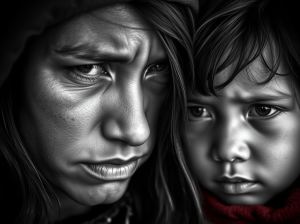
The MMIWG crisis, with 5,712 American Indian/Alaska Native women and girls reported missing in 2016 and 4,200 unsolved cases, underscores the need for Indigenous-focused efforts. Operation Restore Justice could indirectly reduce MMIWG risks by rescuing children from trafficking, a precursor to later victimization. However, unlike Operation Not Forgotten 2024, which partnered with the Bureau of Indian Affairs (BIA) to support Missing and Murdered Indigenous Persons (MMIP) cases in Indian Country, this operation lacks explicit Native American focus.
The absence of tribal partnerships or data on Indigenous victims limits its impact on MMIWG, especially in regions like Albuquerque or Phoenix with significant Native populations. Jurisdictional gaps, such as the Oliphant v. Suquamishruling restricting tribal authority over non-Native perpetrators, remain unaddressed. Future operations should align with the Savanna’s Act (2020) to improve MMIWG data collection and engage tribal law enforcement Explore MMIWG advocacy.
Broader Context and Patel-Bondi Leadership
Under Patel and Bondi, appointed in February 2025, Operation Restore Justice builds on prior anti-crime efforts:
- A $500 million drug bust (April 9, 2025) targeting cartels linked to trafficking.
- Release of Jeffrey Epstein files (February 27, 2025), addressing child exploitation concerns.
- Arrest of two global traffickers (April 30, 2025), showing international reach.
The operation counters criticisms of Patel’s FBI restructuring and Bondi’s DOJ Weaponization Working Group, aligning with President Trump’s anti-trafficking agenda. Public sentiment on X is mixed:
- Supporters (@WarClandestine) praise the 115 rescues as a “triumph for child safety.”
- Critics (@RobinDuggan3) question delays, asking, “Why wait if evidence existed?”
Critical Perspective
Despite its success, Operation Restore Justice faces scrutiny:
- Transparency: Limited details on charges or victim demographics hinder public understanding. For example, Arkansas withheld suspect names due to “ongoing investigations.”
- Prosecution Challenges: Bondi’s “no negotiation” stance is bold, but past data shows 67% of tribal sexual abuse cases were declined (2005–2009), testing DOJ’s follow-through.
- Systemic Issues: Arrests don’t address root causes like online platform vulnerabilities or poverty, particularly in Native American communities where 70% of American Indian/Alaska Native people live in urban areas.
- Sustainability: The five-day surge risks being episodic, like Operation Cross Country (2008–2017), without ongoing efforts.
Looking Ahead: Child Safety and MMIWG
The operation sets a high bar for FBI-DOJ collaboration, but its legacy depends on:
- Convictions: Securing guilty verdicts for the 205 suspects under federal laws.
- Victim Support: Ensuring long-term care for the 115 children, especially Indigenous youth at risk of MMIWG.
- Policy Reform: Strengthening online regulations and tribal jurisdiction to prevent child trafficking.
- MMIWG Integration: Adopting Indigenous-focused strategies, as in Operation Not Forgotten, to address the 4,200 unsolved MMIWG cases.
For updates, visit FBI News or DOJ. Report suspected child exploitation at 1-800-CALL-FBI or tips.fbi.gov. Ashesonair urges readers to support #NoMoreStolenSisters and Native advocacy groups like the Coalition to Stop Violence Against Native Women to amplify MMIWG awareness Join the movement.
Share your thoughts below or on X with #OperationRestoreJustice. What should the FBI prioritize next?





 Ashes on Air
Leave a reply to Child Rescue Operation Ignored by Liberal Media – Patriot Newswire Cancel reply