

May 12, 2025
In the labyrinth of Caracas, where dreams once roared louder than the city’s chaos, Nicolás Maduro Moros drove a bus, weaving through the arteries of Venezuela’s working-class heart. Decades later, he steers a nation on the brink, a president branded a narco-terrorist by the United States, with a $25 million bounty on his head. From El Valle’s dusty streets to the global stage, Maduro’s saga is one of defiance, desperation, and division. Why does the U.S. want his capture? The answer lies in a volatile mix of criminal charges, geopolitical chess, and a humanitarian tragedy that has driven 7.89 million Venezuelans to flee. This is the story of a man hunted—not just for what he’s done, but for what he represents.
The Legal Noose: Narco-Terrorism and Drug Lords
On March 26, 2020, the U.S. Department of Justice dropped a bombshell: Nicolás Maduro, Venezuela’s president since 2013, was indicted in New York’s Southern District for narco-terrorism, conspiracy to import cocaine, and weapons offenses. Alongside 14 allies, including Diosdado Cabello, head of the Constituent Assembly, and Vladimir Padrino López, defense minister, Maduro was accused of leading the “Cartel of the Suns,” a drug trafficking ring named for the sun insignias on Venezuelan military uniforms. The charges, carrying a 20-year minimum sentence, paint a damning picture: since 1999, Maduro allegedly collaborated with the Revolutionary Armed Forces of Colombia (FARC) to ship multi-ton cocaine loads to the U.S., aiming to “flood” American streets and undermine public health.
The indictment details a sprawling operation. As foreign minister (2006–2012), Maduro is said to have negotiated cocaine shipments, coordinated trafficking routes through Honduras, and armed FARC with military-grade weapons. As president, he allegedly used drug profits to prop up his regime, offsetting losses from a collapsing oil sector battered by U.S. sanctions. Attorney General William Barr called it a deliberate assault on the U.S., comparing Maduro’s tactics to those of rogue states. The State Department backed the charges with a $15 million reward for Maduro’s arrest, raised to $25 million on January 10, 2025, hours after his disputed third-term inauguration. Rewards of $25 million for Cabello and $15 million for Padrino López signal a broader hunt for Venezuela’s ruling elite.
Corruption charges compound the case. The U.S. Treasury’s Office of Foreign Assets Control (OFAC) accuses Maduro’s inner circle, including his wife Cilia Flores and son Nicolás Maduro Guerra (“Nicolasito”), of laundering drug money through Venezuela’s banking system. A 2017 National Assembly probe, cited by the State Department, found Maduro’s government inflated food import contracts—paying $42 for $13 worth of goods—to siphon millions, allegedly funding the CLAP program that trades food boxes for votes. For the U.S., Maduro isn’t just a drug lord; he’s a kleptocrat bleeding a nation dry.
The Political Game: Democracy, Adversaries, and Votes
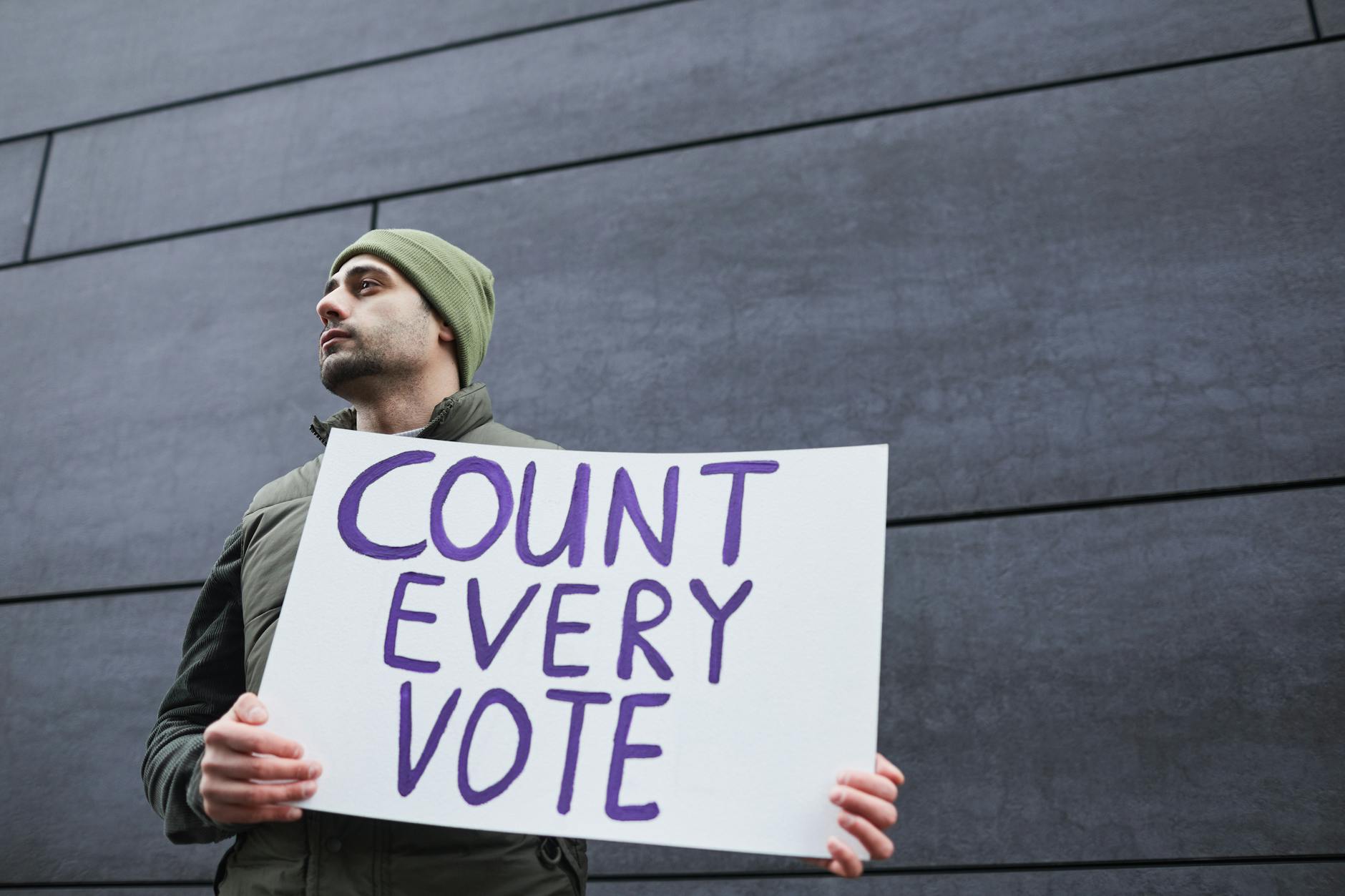
The legal case is only half the story. The U.S.’s pursuit of Maduro is steeped in political motives, from dismantling a socialist stronghold to wooing Florida’s expatriate voters. Since 2018, the U.S. has rejected Maduro’s presidency, citing fraudulent elections. The 2018 vote, boycotted by the opposition, led to the National Assembly declaring Maduro a usurper, prompting the U.S. to recognize Juan Guaidó as interim president in 2019. The July 2024 election, marred by allegations of rigging, saw Maduro claim victory without evidence, while opposition tallies showed Edmundo González winning over 67% of the vote. Secretary of State Antony Blinken called Maduro’s January 2025 inauguration “illegitimate,” and OFAC sanctioned eight regime officials, including PDVSA’s head, for post-election repression.
Geopolitically, Maduro’s alliances with Russia, China, and Cuba make him a U.S. adversary. Venezuela hosts Russian military assets and Chinese investments, raising security concerns. Social media posts claim Maduro issues passports to Hezbollah and Iranian operatives, amplifying fears, though evidence is scarce. The Trump administration’s “maximum pressure” policy—revived in 2025—seeks to counter these ties, with figures like Marco Rubio pushing to revoke Chevron’s oil license, a rare economic lifeline granted in 2023. Yet, pragmatism persists: in January 2025, U.S. envoy Richard Grenell secured the release of six detained Americans, hinting at backchannel deals.
Domestic politics also drive the chase. Florida, home to Venezuelan, Cuban, and Nicaraguan exiles, is a key electoral battleground. The 2020 indictment, announced during an election year, and the 2025 bounty increase, aligned with Trump’s second term, cater to these voters, who see Maduro as a symbol of socialist failure. Critics like Frank Mora, a former Pentagon official, argue the charges are less about justice and more about “electoral theater,” noting the U.S.’s selective outrage compared to allies like Colombia, a major cocaine source.
A Nation in Ruins: The Human Cost
The U.S.’s pursuit cannot be separated from Venezuela’s collapse, a tragedy that lends urgency to the charges but complicates their impact. Since 2014, Venezuela’s GDP has plummeted 80%, hyperinflation has rendered the bolívar worthless, and shortages of food and medicine have crippled daily life. Human Rights Watch and the UN report over 20,000 extrajudicial killings and 15,000 political arrests under Maduro, with the 2024 election protests leaving 2,000 detained and 24 dead. The ICC investigates him for crimes against humanity, and Argentina’s courts ordered his arrest in 2024. Over 7.89 million Venezuelans—nearly a quarter of the population—have fled, creating one of the largest refugee crises in history.
Sanctions, intensified since 2014, aim to choke Maduro’s regime but exacerbate suffering. The U.S. blames Maduro’s mismanagement and corruption, pointing to PDVSA’s decay and rigged contracts. Maduro counters that sanctions are an “economic war,” crippling oil revenue and starving citizens. Both are true: corruption siphons billions, but sanctions, as a 2019 CEPR study noted, have caused tens of thousands of deaths by limiting access to medicine and food. The bounty and charges, while symbolic, haven’t dislodged Maduro, who retains military loyalty and allies like Russia, which props up his regime with loans and weapons.
Maduro’s Defiance: A Survivor’s Tale
To understand the U.S.’s pursuit, one must see Maduro through his own lens—a man shaped by Caracas’s working-class grit and Hugo Chávez’s revolutionary fire. Born in 1962, Maduro grew up in El Valle, son of a unionist father, and dropped out of high school to organize students. His 1986 training in Cuba cemented his anti-U.S. stance, and as Chávez’s foreign minister, he forged ties with Moscow and Beijing. Named Chávez’s successor in 2012, Maduro inherited a polarized nation and a mantle he’s wielded with tenacity, if not charisma.
Maduro calls the U.S. charges a “conspiracy” by “racist cowboy” Trump and Colombia, the “world’s cocaine factory.” He denies drug trafficking, framing the Cartel of the Suns as a U.S. fabrication, and points to America’s drug consumption as the real issue. His wife, Cilia Flores, sanctioned for corruption, and son, Nicolasito, in senior posts, echo his defiance, as do allies like Russia’s Vladimir Putin and Cuba’s Miguel Díaz-Canel. Supporters on X, like @QuinnCat13, hail him as a socialist hero resisting imperialism, though his 25% approval rating reflects a shrinking base.
Maduro’s resilience frustrates the U.S. Protected by Venezuela’s military and foreign aid, he’s survived coups, protests, and sanctions. His rhetoric—threatening to “liberate” Puerto Rico or claiming Chávez’s spirit guides him—rallies loyalists but masks a regime under strain. The U.S.’s 2020 “mercenary” invasion claim, involving arrested Americans, bolstered his narrative of victimhood, even if exaggerated.
The Evidence Question: Truth or Tactic?
The U.S.’s case rests on intelligence and court filings, but public evidence is thin. The indictment cites decades of FARC collaboration, yet Maduro’s role as a hands-on drug lord strains credulity for a career politician. Venezuela’s strategic position makes it a trafficking hub, but Colombia’s dominance in cocaine production raises questions about selective targeting. Maduro’s counterclaim—that the U.S. seeks regime change, not justice—gains traction when viewed against past interventions, like Bolivia in 2019. X posts alleging Maduro aids Tren de Aragua or Hezbollah lack corroboration, risking hype over fact.
Critics argue the charges are a pressure tactic, not a courtroom strategy. Maduro’s arrest is improbable without military betrayal or foreign intervention, and extradition faces legal hurdles. The bounty, as Mora notes, “looks good in Miami” but does little to address Venezuela’s crisis. The U.S.’s failure to oust Maduro since 2019, despite Guaidó’s recognition, suggests a miscalculation, pushing Venezuela toward Russia and China.
A Stalemate’s Cost: Venezuela’s Future
Why does the U.S. want Nicolás Maduro? It’s a question of drugs, power, and principle—but also of failure. The narco-terrorism charges, corruption allegations, and election fraud paint him as a criminal dictator, justifying a $25 million bounty and sanctions. Yet, political motives—countering adversaries, winning votes—cloud the pursuit’s purity. The human toll, with 7.89 million refugees and a shattered economy, demands accountability, but sanctions and bounties haven’t delivered change, only deepened despair.
Maduro, the bus driver turned strongman, remains Venezuela’s paradox: a polarizing figure who thrives on defiance yet rules a crumbling nation. His capture may satisfy justice, but without addressing Venezuela’s systemic woes—corruption, sanctions, and division—it’s a hollow prize. As the U.S. and Maduro lock horns, the world watches a tragedy unfold, with no clear victors, only survivors.
Sources
- Encyclopædia Britannica. “Nicolás Maduro.” Accessed May 2025. https://www.britannica.com/biography/Nicolas-Maduro.
- CNN. “Nicolás Maduro Fast Facts.” April 26, 2013. https://www.cnn.com/2013/04/26/americas/nicolas-maduro-fast-facts.
- BBC News. “Venezuela’s Maduro Faces Growing Isolation After Disputed Election.” August 2024. https://www.bbc.com/news/topics/c9edz74pjnkt.
- The Guardian. “US Offers $15m Reward for Capture of Venezuelan President Nicolás Maduro.” March 26, 2020. https://www.theguardian.com/world/2020/mar/26/nicolas-maduro-us-charges-venezuela.
- Associated Press. “US Raises Bounty on Venezuela’s Maduro to $25 Million.” January 10, 2025. https://apnews.com/hub/nicolas-maduro.
- Al Jazeera. “US Charges Venezuela’s Maduro with Narco-Terrorism.” March 26, 2020. https://www.aljazeera.com/news/2020/3/26/us-charges-venezuelas-maduro-with-narco-terrorism.
- POLITICO. “Trump Administration Weighs Revoking Chevron’s Venezuela License.” January 2025. https://www.politico.com/news/nicolas-maduro.
- The New York Times. “Venezuela’s Maduro Tightens Grip Amid US Pressure.” August 2024. https://www.nytimes.com/topic/nicolas-maduro.
- Human Rights Watch. “Venezuela: Systematic Abuses Under Maduro’s Regime.” September 2024. https://www.hrw.org/americas/venezuela.
- United Nations. “Report on Human Rights Violations in Venezuela.” September 2020 (via secondary reporting). https://www.ohchr.org/en/countries/venezuela-bolivarian-republic.
- Center for Economic and Policy Research. “Economic Sanctions as Collective Punishment: The Case of Venezuela.” April 2019. https://cepr.net/report/economic-sanctions-as-collective-punishment-the-case-of-venezuela/.


 Ashes on Air
Thank you for taking the time to share your thoughts. Your voice is important to us, and we truly value your input. Whether you have a question, a suggestion, or simply want to share your perspective, we’re excited to hear from you. Let’s keep the conversation going and work together to make a positive impact on our community. Looking forward to your comments!