
May 12th, 2025
In the heart of Caracas, where the concrete sprawl of El Valle hums with the rhythm of working-class life, a young Nicolás Maduro Moros once dreamed beyond the dusty streets of his childhood. Born on November 23, 1962, to a trade unionist father and a Colombian-born mother, Maduro grew up in a Venezuela simmering with political fervor. Today, as president of a nation teetering on the edge of collapse, he is both a symbol of socialist resilience and a lightning rod for accusations of authoritarianism. This is the story of a man who rose from driving buses to steering a country through one of the most tumultuous periods in its history—a survivor whose legacy is as divisive as the land he governs.

A Childhood Shaped by Struggle and Ideals
Maduro’s early years were rooted in Calle 14, Los Jardines, a modest neighborhood in Caracas where the pulse of the working class beat strong. His father, Nicolás Maduro García, was a fiery trade union leader, instilling in his son a deep commitment to labor rights and leftist ideals. His mother, Teresa de Jesús Moros, hailed from Cúcuta, Colombia, a detail that would later spark fierce debates about Maduro’s nationality and eligibility to lead Venezuela. Raised with three sisters—María Teresa, Josefina, and Anita—in a Roman Catholic household, young Nicolás absorbed the values of community and resistance.
The 1960s and 1970s were a volatile time in Venezuela, with leftist movements clashing against a government aligned with U.S. interests. Maduro’s father brought home tales of strikes and solidarity, planting seeds of rebellion in his son. Yet, there was a softer side to the boy: a love for music, from the revolutionary anthems of the era to the soulful strains of John Lennon. At Liceo José Ávalos, a public high school, Maduro showed early leadership as president of the student union, but academics took a backseat to activism. He never graduated, a fact he later wore as a badge of honor, proclaiming himself Venezuela’s first “worker president.”
The question of his nationality looms large in his origin story. Critics, including former ambassador Diego Arria, have demanded his birth certificate, alleging he was born in Colombia, which would violate Venezuela’s constitutional requirement for presidents to be Venezuelan by birth without dual nationality. The regime’s opacity fuels skepticism, but no definitive evidence has emerged to disprove Maduro’s claim of Caracas nativity. This ambiguity, like much of his life, underscores the tension between his public image and the shadows that trail him.
Teenage Rebellion and Radical Roots
As a teenager, Maduro embraced the counterculture of the 1970s, describing himself as “a little bit hippie.” With long hair and a penchant for Led Zeppelin, he dabbled in a rock band and flirted with a musical career. But the streets of Caracas called louder than the stage. At 12, he joined Ruptura, a radical student group, and clashed with police during protests at Venezuela Central University. His father’s influence and the era’s leftist fervor—amplified by figures like Fidel Castro—pushed him toward militancy.
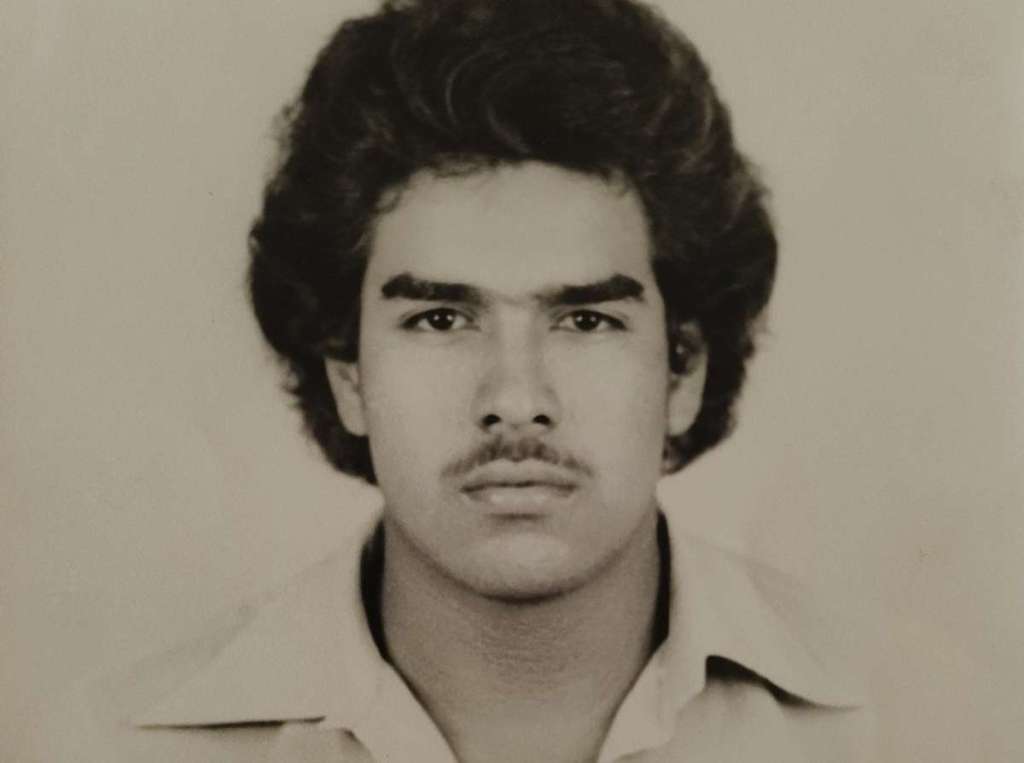
Maduro’s association with the Socialist League, a group linked to guerrilla activities like the 1976 kidnapping of American businessman William Niehous, marked his radicalization. While there’s no evidence he participated in such acts, his ties to the group hinted at a willingness to flirt with extremism. Education fell by the wayside; instead, he honed his skills as an organizer, a talent that would define his political ascent. His spiritual side also emerged, drawn to the teachings of Indian mystic Sathya Sai Baba, a curiosity that contrasted with his street-tough persona.
Adulthood: From Bus Driver to Bodyguard
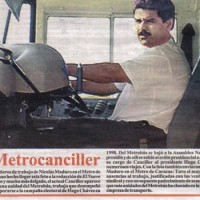
In his 20s, Maduro found stability as a bus driver for the Caracas Metro, a job that grounded him in the working-class ethos he champions. Following his father’s path, he founded an informal labor syndicate, defying the company’s anti-union stance. His knack for negotiation and grassroots organizing caught the eye of leftist circles. In 1986, at 24, he traveled to Havana, Cuba, attending the Escuela Nacional de Cuadros Julio Antonio Mella, a training ground for communist cadres. There, under the tutelage of Pedro Miret Prieto, a Fidel Castro confidant, Maduro deepened his ideological roots and forged ties that would sustain his regime decades later.
Back in Venezuela, Maduro served as a bodyguard for José Vicente Rangel, a leftist presidential candidate, gaining entrée into political circles. His personal life also took shape. His first marriage to Adriana Guerra Angulo produced a son, Nicolás Maduro Guerra (“Nicolasito”), born in 1990, who later assumed controversial government roles. In the early 1990s, Maduro met Cilia Flores, a lawyer defending Hugo Chávez after his 1992 coup attempt. Their romance blossomed amid the fervor of Chávez’s movement, and they married in 2013, cementing a political partnership that would make Flores a formidable figure in Maduro’s regime.
The Political Climb: Chávez’s Heir
Maduro’s political career began in earnest when he joined Chávez’s Revolutionary Bolivarian Movement-200 (MBR-200) in the early 1990s, campaigning for Chávez’s release from prison. He helped found the Fifth Republic Movement, which propelled Chávez to the presidency in 1998. Elected to the Venezuelan Chamber of Deputies in 1998, the National Constituent Assembly in 1999, and the National Assembly in 2000, Maduro rose steadily, serving as Assembly president from 2005 to 2006. His loyalty to Chávez, more than personal charisma, defined his ascent.
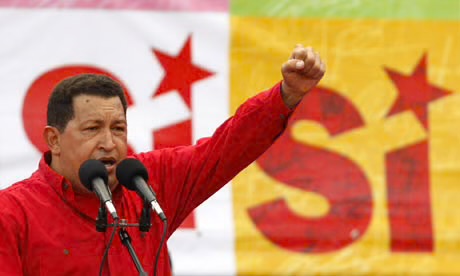
In 2006, Chávez appointed Maduro foreign minister, a surprising choice given his lack of diplomatic training or foreign language skills. For six years, Maduro advanced Chávez’s anti-U.S. agenda, forging alliances with Russia, China, and controversial leaders like Libya’s Muammar al-Qaddafi. His affable style earned praise, though critics noted his lack of finesse. In 2012, as Chávez battled cancer, Maduro became vice president, and in December 2012, Chávez named him successor, a decision that quelled rival ambitions within the United Socialist Party of Venezuela (PSUV).
Chávez’s death on March 5, 2013, thrust Maduro into the presidency. He won the April 2013 special election with 50.62% of the vote, a razor-thin margin that sparked fraud allegations and protests. Re-elected in 2018 and 2024, both victories were widely condemned as rigged, with the 2024 election triggering violent crackdowns and a deepening political crisis. Maduro’s rule became increasingly authoritarian, marked by decrees, media control, and suppression of dissent, transforming him from Chávez’s loyal lieutenant into a strongman in his own right.
The United States: A Love-Hate Saga
Maduro’s relationship with the United States is a saga of fiery rhetoric, crippling sanctions, and pragmatic backchannels, rooted in Chávez’s anti-imperialist legacy. As foreign minister, Maduro accused the U.S. of plotting coups, a narrative he amplified as president. The U.S. imposed sanctions in 2014 for human rights abuses, escalating in 2017 by labeling Maduro a “dictator.” In 2019, the U.S. recognized opposition leader Juan Guaidó as interim president, prompting Maduro to sever diplomatic ties and expel U.S. diplomats. The U.S. closed its Caracas embassy, and no ambassadors have been exchanged since 2010.
By 2025, tensions remain high. The U.S. rejected Maduro’s 2024 election victory, recognizing opposition candidate Edmundo González as president-elect and imposing new sanctions on eight regime officials. In March 2020, the U.S. charged Maduro with narco-terrorism, alleging he trafficked cocaine to harm Americans, and raised the reward for his arrest to $25 million in January 2025. Yet, pragmatism persists. In 2023, the U.S. allowed Chevron to resume limited oil operations, a lifeline for Maduro’s cash-strapped regime. In January 2025, U.S. envoy Richard Grenell secured the release of six detained Americans, discussing migration and sanctions, while President Trump weighs revoking Chevron’s license to curb Venezuelan oil imports.
Maduro’s rhetoric—threatening to “liberate” Puerto Rico or denouncing U.S. “sly diplomacy”—contrasts with his willingness to negotiate, as seen in July 2024 talks to lift sanctions. Supporters view his defiance as resistance to U.S. hegemony; critics, including U.S. officials and Venezuelan exiles, see a dictator clinging to power amid 7.89 million emigrants and a collapsed economy. The U.S.’s “maximum pressure” policy has failed to oust him, pushing Venezuela toward Russia and China, yet domestic pressures may force Maduro to seek deals.
The Man Behind the Power
Who is Nicolás Maduro, beyond the headlines? To supporters, he’s a man of the people, a bus driver who rose to defend Chávez’s socialist dream. His affability, honed in union halls, shines in personal interactions, and his spiritual side—visiting Sai Baba’s ashram in India—adds depth to his image. Yet, critics paint a darker portrait: a ruthless pragmatist who prioritizes power over principle, overseeing over 20,000 extrajudicial killings and 15,000 political arrests, per Human Rights Watch and the UN. His verbal gaffes, like confusing “penises” for “fishes,” draw mockery, while homophobic slurs in 2013 clash with later progressive gestures, like supporting same-sex marriage.
Maduro’s resilience is undeniable. Described as Venezuela’s “ultimate political survivor,” he has outlasted coup attempts, economic collapse, and international isolation. His wife, Cilia Flores, a former National Assembly president, is a key advisor, sanctioned by the U.S. for corruption. Their son, Nicolasito, holds senior posts, sparking nepotism charges. Maduro’s inner circle—bolstered by allies like Russia and Cuba—sees him as a bulwark against imperialism. Yet, critics, from opposition leader María Corina Machado to the ICC, which investigates alleged crimes against humanity, condemn his regime’s brutality.
Voices of Loyalty and Dissent
Maduro’s friends and family form a tight-knit fortress. Hugo Chávez, his mentor, predicted in 2012 that Maduro would face “difficult battles” but trusted his loyalty. Cilia Flores, a political heavyweight, amplifies his resolve, while Nicolasito’s roles signal dynastic ambitions. Allies like Russia’s Vladimir Putin and Cuba’s Miguel Díaz-Canel provide economic and diplomatic lifelines, praising Maduro’s defiance. On X, pro-Maduro voices like @QuinnCat13 laud his rise from worker to leader, though such posts often lack nuance.
Critics are unrelenting. Opposition figures like Juan Guaidó and Edmundo González accuse Maduro of stealing elections, with 2024 vote tallies showing González’s landslide. Human rights groups document systematic abuses, including torture and arbitrary detentions. The U.S., EU, and most Latin American nations reject his legitimacy, while exiles like Daniela, quoted in Caracas Chronicles, lament a lost future. Former ally Luisa Ortega Díaz, once Venezuela’s chief prosecutor, accused Maduro of profiting from food shortages, revealing cracks in Chavista loyalty. Public polls reflect despair: only 14% approved of Maduro in March 2019, with 84.6% wanting his removal in 2018.
The Present: A Nation on the Brink
As of May 12, 2025, Maduro clings to power in his third term, sworn in on January 10 amid protests and international condemnation. The July 2024 election, marred by fraud allegations, saw Maduro declared winner without evidence, while opposition tallies gave González a wide lead. Over 2,000 arrests and 24 deaths followed, with “Operation Tun Tun” targeting dissenters. Venezuela’s economy is a shadow of its former self, with an 80% GDP drop since 2014, hyperinflation, and shortages driving 7.89 million to flee. U.S. sanctions, reimposed in 2024, choke oil revenue, though Maduro’s allies—Russia, China, Cuba—provide support.
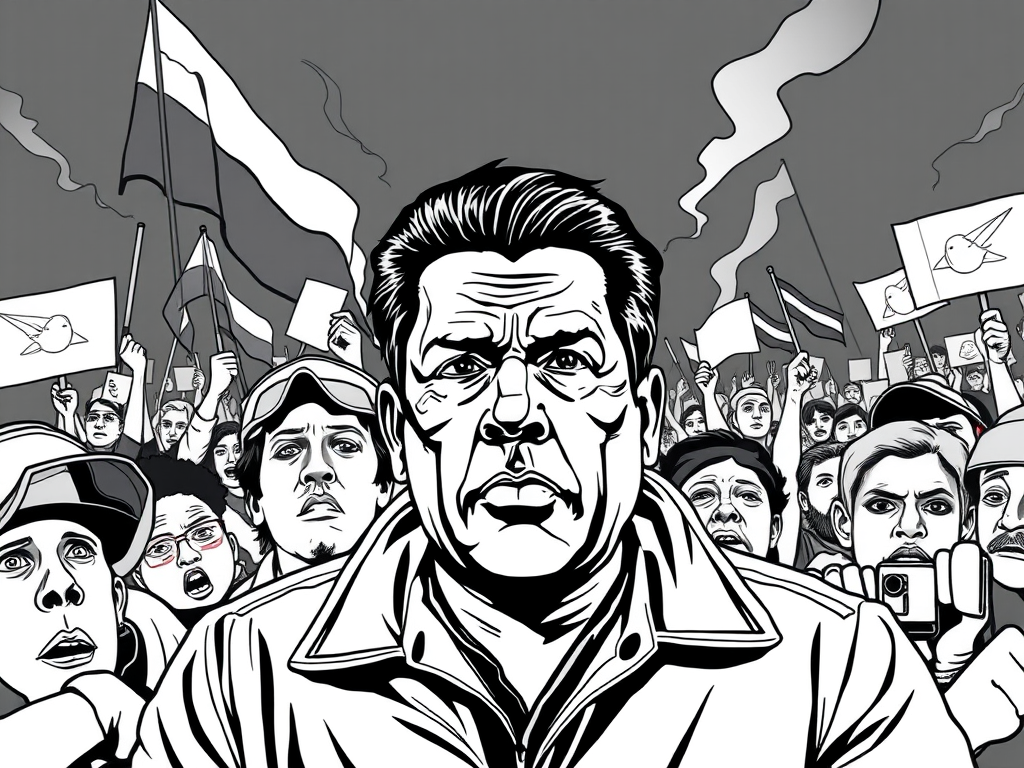
Maduro’s regime controls media and institutions, ruling by decree since 2015. The ICC’s probe into crimes against humanity looms, and Argentina’s courts have ordered his arrest. Yet, he persists, leveraging anti-U.S. rhetoric and social programs like CLAP, tainted by corruption, to maintain a dwindling base. His adoption of “woke” language aims to court global leftists, but with 25% domestic support, his grip is shaky. X posts speculate about exile or U.S. negotiations, but Maduro’s history suggests he’ll fight to the end.
A Legacy in Question
Nicolás Maduro’s journey—from a Caracas bus driver to Venezuela’s strongman—is a paradox of ambition and tragedy. His supporters see a working-class hero, carrying Chávez’s torch against imperialist odds. His critics see a dictator, whose mismanagement and repression have plunged a resource-rich nation into despair. The truth lies in the gray: a man of limited intellect but boundless tenacity, shaped by loyalty and hardened by power. His relationship with the U.S., a dance of hostility and necessity, mirrors Venezuela’s broader struggle—caught between ideology and survival.
As Venezuela staggers forward, Maduro remains its most polarizing figure. Whether he is remembered as a socialist martyr or a cautionary tale of authoritarianism depends on the lens of history. For now, he stands at the helm, a survivor in a storm of his own making, with the world watching to see how long he can endure.
Sources
- Encyclopædia Britannica. “Nicolás Maduro.” Accessed May 2025. https://www.britannica.com/biography/Nicolas-Maduro.
- CNN. “Nicolás Maduro Fast Facts.” April 26, 2013. https://www.cnn.com/2013/04/26/americas/nicolas-maduro-fast-facts.
- BBC News. “Nicolás Maduro: Venezuela’s Defiant Leader.” December 7, 2012. https://www.bbc.com/news/world-latin-america-20664349.
- The Guardian. “Nicolás Maduro: From Bus Driver to Venezuela’s President.” April 15, 2013. https://www.theguardian.com/world/2013/apr/15/nicolas-maduro-profile-venezuela-president.
- ThoughtCo. “Biography of Nicolás Maduro, President of Venezuela.” February 11, 2020. https://www.thoughtco.com/biography-of-nicolas-maduro-president-of-venezuela-4783508.
- The Famous People. “Nicolás Maduro Biography.” Accessed May 2025. https://www.thefamouspeople.com/profiles/nicols-maduro-14165.php.
- Associated Press. “Venezuela’s Maduro Sworn in for Third Term Amid Election Controversy.” January 10, 2025. https://apnews.com/hub/nicolas-maduro.
- Al Jazeera. “Venezuela’s Maduro Faces Growing Isolation After Disputed Election.” August 2024. https://www.aljazeera.com/tag/nicolas-maduro/.
- Euronews. “Maduro Declared Winner in Venezuela’s Contested Election.” July 29, 2024. https://www.euronews.com/tag/nicolas-maduro.
- POLITICO. “U.S. Raises Bounty on Venezuela’s Maduro to $25 Million.” January 2025. https://www.politico.com/news/nicolas-maduro.
- The New York Times. “Nicolás Maduro Tightens Grip on Venezuela Amid Crisis.” August 2024. https://www.nytimes.com/topic/nicolas-maduro.
- Human Rights Watch. “Venezuela: Systematic Abuses Under Maduro’s Regime.” September 2024. https://www.hrw.org/americas/venezuela.
- United Nations. “Report on Human Rights Violations in Venezuela.” September 2020 (via secondary reporting). https://www.ohchr.org/en/countries/venezuela-bolivarian-republic.



 Ashes on Air
Thank you for taking the time to share your thoughts. Your voice is important to us, and we truly value your input. Whether you have a question, a suggestion, or simply want to share your perspective, we’re excited to hear from you. Let’s keep the conversation going and work together to make a positive impact on our community. Looking forward to your comments!