
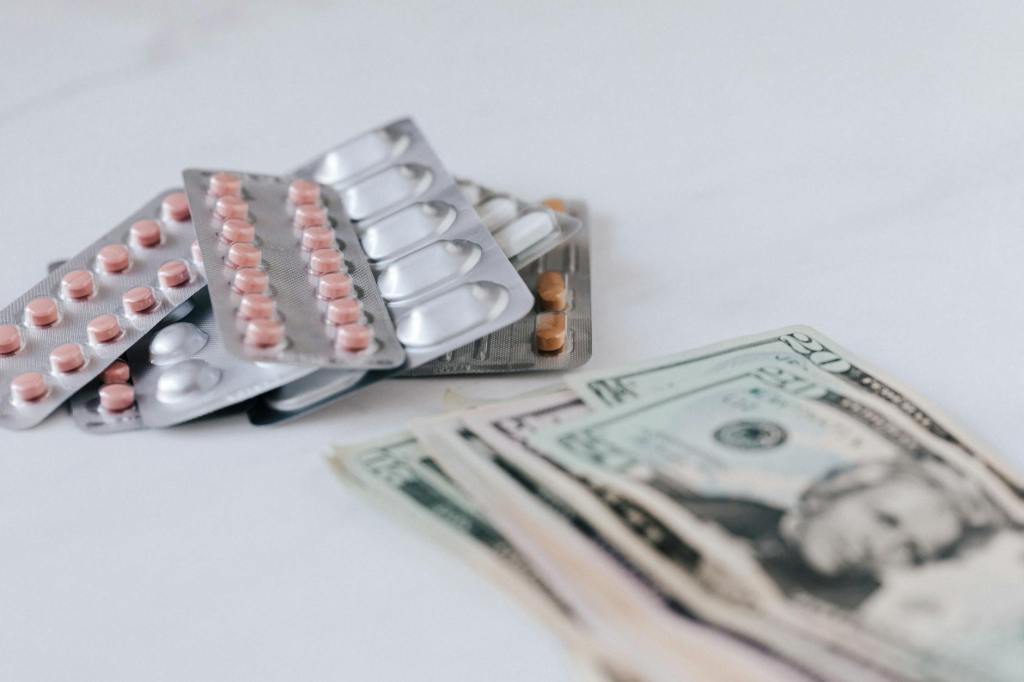
Washington, D.C. — May 12, 2025 — President Donald J. Trump marked a frenetic day of economic and policy actions on Monday, signing a sweeping executive order to slash prescription drug prices, announcing a breakthrough trade deal with China, and departing for a high-stakes Middle East trip. These moves, coming on the heels of a recent U.S.-UK trade agreement, underscore Trump’s aggressive push to rebalance global trade and deliver domestic wins as he nears the 100-day mark of his second term. From tackling the opioid crisis to securing billions in potential investments, the day encapsulated Trump’s “America First” agenda in action.
U.S.-China Trade Deal: A 90-Day Tariff Truce
In a press conference in Geneva, Treasury Secretary Scott Bessent and U.S. Trade Representative Jamieson Greer unveiled an initial trade agreement with China, described as a “total reset” of bilateral relations. The deal, negotiated over the weekend, suspends 24 percentage points of reciprocal tariffs—reducing rates from 34% to 10%—for a 90-day period starting May 14, 2025. The U.S. will remove additional tariffs imposed on April 8 and 9, 2025, while retaining pre-April tariffs, including those under Section 301 and fentanyl-related measures. China will lift retaliatory tariffs from April 4, 2025, and suspend non-tariff countermeasures, such as regulatory barriers, implemented since April 2.
“This is a priority for President Trump and the whole administration,” Bessent said, highlighting China’s unexpected engagement on the fentanyl crisis. The presence of China’s Deputy Minister for Public Safety facilitated “robust and highly detailed” discussions on curbing precursor chemicals fueling North America’s opioid epidemic, which claims hundreds of thousands of lives annually. Ambassador Greer added, “We are going to have our economy continue taking off as we put structure around these negotiations and get global trade into a better place.”
The agreement aims to address the $295.4 billion U.S.-China trade deficit (2024 figures) and the “China shock” that hollowed American manufacturing. Bessent criticized the Biden Administration for failing to enforce Trump’s 2020 Phase One deal, noting, “The Chinese delegation basically told us that once President Biden came into office, they just ignored their obligations.” The 90-day pause sets the stage for talks led by Bessent, Greer, and China’s Vice Premier He Lifeng to open Chinese markets and tackle subsidies. U.S. stocks, including the Dow and S&P 500, climbed Monday, reflecting market optimism over eased trade tensions.
Most-Favored-Nation Drug Pricing: A Bold but Contentious Move
At 9:00 a.m. in the White House, Trump signed an Executive Order to implement Most-Favored-Nation (MFN) pricing for prescription drugs, aiming to align U.S. prices with those in other developed nations. The order, described by Trump as “one of the most consequential in our Country’s history,” targets a 30-80% price reduction “almost immediately.” The U.S., with 5% of the global population, funds 75% of pharmaceutical profits, paying nearly three times more for brand-name drugs than OECD nations. Trump argued Americans are “subsidizing socialism abroad with skyrocketing prices at home.”
The order directs Health and Human Services Secretary Robert F. Kennedy Jr. to set MFN price targets within 30 days and facilitate direct-to-consumer purchasing programs, bypassing middlemen like pharmacy benefit managers. If manufacturers fail to comply within six months, HHS will propose rules to enforce MFN pricing, consider drug importation from low-cost nations, and pursue antitrust actions against anticompetitive practices. The USTR and Commerce Department will also crack down on foreign policies suppressing drug prices, which Trump claims force U.S. consumers to subsidize global R&D.
“Everybody should equalize. Everybody should pay the same price,” Trump said at a press conference, threatening tariffs on non-compliant drugmakers. The policy revives a 2020 effort blocked by courts after lawsuits from the Pharmaceutical Research and Manufacturers of America (PhRMA). PhRMA’s CEO Stephen Ubl decried the order as a “bad deal for American patients,” arguing it “jeopardizes the hundreds of billions our member companies are planning to invest in America.” Wall Street analysts, like Citi’s Geoff Meacham, warned of a “serious blow” to the industry, though drugmaker shares, including Merck and Pfizer, rallied Monday as investors doubted swift implementation.
Middle East Trip: Chasing $3 Trillion in Deals
As the trade and drug pricing announcements unfolded, Trump departed for his first major foreign trip of his second term, a four-day visit to Saudi Arabia, Qatar, and the United Arab Emirates. The trip, focused on securing over $3 trillion in commercial and defense deals, builds on Trump’s 2017 Gulf engagements. Saudi Arabia has pledged $600 billion in U.S. investments over four years, while the UAE aims for $1.4 trillion over a decade, spanning defense, aviation, technology, and infrastructure. Events like the Saudi-U.S. Business Conference in Riyadh highlight the commercial focus.
Trump’s remarks before the trip, including a May 6 teaser of a “very, very big announcement,” set high expectations. While that announcement was the UK trade deal, the Middle East trip aligns with his economic vision. However, regional tensions, such as the Israel-Gaza conflict and Iran’s nuclear ambitions, loom large. Trump’s plan to rename the Persian Gulf the “Arabian Gulf” during the trip sparked outrage in Iran, with Foreign Minister Abbas Araghchi warning of “the wrath of all Iranians.”
Broader Context: A Week of Economic Momentum
Monday’s actions cap a week of economic breakthroughs, including the U.S.-UK trade deal on May 8, which reduced tariffs on steel, cars, and ethanol. Trump’s trade agenda, rooted in his first-term template, seeks to reverse decades of “unfair trade practices” that he claims gutted U.S. manufacturing. The U.S.-China deal’s fentanyl cooperation addresses a national emergency, while the MFN order tackles a bipartisan pain point—drug costs. Public support for lower prices is high, with over 75% of Americans citing unaffordable medications, per KFF polls.
Challenges remain. The pharmaceutical industry’s legal muscle and GOP skepticism of price controls could stall the MFN order, as seen in 2020. The U.S.-China deal’s 90-day window requires swift progress to avoid re-escalation, and Middle East deals face scrutiny over Trump Organization ties (e.g., a Dubai hotel project). Still, Trump’s flurry of actions projects momentum, with House Republicans eyeing Medicaid cuts to fund tax reductions, bolstered by “massive incoming tariff money,” as Trump noted on Truth Social.
Looking Ahead
May 12, 2025, showcased Trump’s deal-making prowess, from trade truces to drug price reforms, as he embarked on a Middle East mission to cement economic ties. The U.S.-China deal offers a temporary reprieve, with fentanyl cooperation a rare bipartisan win. The MFN order, while ambitious, faces legal and industry hurdles. As Trump navigates the Gulf’s geopolitical and commercial landscape, the outcomes of these initiatives will shape his second term’s economic legacy. For now, the “Golden Age of America,” as Trump calls it, is a work in progress, fueled by bold promises and high-stakes negotiations.
Ashes on Air will continue to monitor these developments, providing updates on Trump’s Middle East trip and the implementation of his trade and drug pricing policies.
Sources
- “ART OF THE DEAL: U.S., China Ink Initial Trade Deal.” The White House, May 12, 2025.
- “Fact Sheet: President Donald J. Trump Secures a Historic Trade Win for the United States.” The White House, May 12, 2025.
- “DELIVERING MOST-FAVORED-NATION PRESCRIPTION DRUG PRICING TO AMERICAN PATIENTS.” Executive Order, The White House, May 12, 2025.
- “Fact Sheet: President Donald J. Trump Announces Actions to Put American Patients First by Lowering Drug Prices and Stopping Foreign Free-riding on American Pharmaceutical Innovation.” The White House, May 12, 2025.
- “GREAT DEAL FOR AMERICA: President Trump’s ‘Breakthrough’ Trade Deal.” The White House, May 8, 2025.
- “Trump Teases ‘Very, Very Big Announcement’ Ahead of Middle East Trip.” The New York Times, May 6, 2025.
- “Why Trump is focusing on business deals on his Middle East trip.” NPR, May 10, 2025.
- “Trump plans to announce US will refer to Arabian Gulf rather than Persian Gulf.” The Guardian, May 7, 2025.
- “Remarks: Donald Trump Attends the Swearing In of Steve Witkoff in the Oval Office.” Roll Call Factba.se, May 6, 2025.
- Kaiser Family Foundation (KFF) polls on prescription drug affordability, 2024-2025.
- News reports for PhRMA CEO Stephen Ubl’s statement, May 12, 2025.
- Wall Street analysis for Citi analyst Geoff Meacham’s statement, May 12, 2025



 Ashes on Air
Thank you for taking the time to share your thoughts. Your voice is important to us, and we truly value your input. Whether you have a question, a suggestion, or simply want to share your perspective, we’re excited to hear from you. Let’s keep the conversation going and work together to make a positive impact on our community. Looking forward to your comments!