

On May 1, 2025, a significant congressional briefing on Unidentified Aerial Phenomena (UAP) took place on Capitol Hill, organized by the UAP Disclosure Fund and supported by Representatives Anna Paulina Luna, Tim Burchett, Jared Moskowitz, and Nick Begich. Eight distinguished panelists—spanning science, military, intelligence, and innovation—presented insights into UAP’s implications for our world, from national security to technological frontiers. For those new to this topic, this briefing offered a rare glimpse into a subject often overlooked. Meet the panelists who shared their expertise, including Dr. Eric Davis, whose claims about non-human species captivated newcomers, sparking curiosity about what might be out there.
Dr. Eric Davis: The Physicist Investigating UAP’s Origins
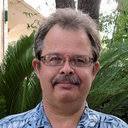
What if a scientist said UAP could involve alien life? Dr. Eric Davis is that researcher. With a Ph.D. in astrophysics from the University of Arizona, he’s a theoretical physicist specializing in advanced propulsion, like faster-than-light concepts. Davis served as a key scientist in the Pentagon’s Advanced Aerospace Threat Identification Program (AATIP), analyzing UAP with a rigorous, scientific approach.
At the May 1 briefing, Davis shared striking claims: the U.S. may have recovered UAP crafts made of materials beyond our technology, potentially using “warp bubble” propulsion. His assertion that a 1947 New Mexico crash involved 4-foot “gray” aliens and other species was a bombshell for UAP newcomers, though it remains speculative without evidence. Davis’s bold ideas invite us to explore the possibility of extraterrestrial contact, making him a central figure in the UAP conversation.
Rear Admiral Tim Gallaudet: The Navy Veteran Sharing UAP Encounters

Imagine a Navy admiral revealing UAP sightings kept quiet. Rear Admiral Tim Gallaudet (Ret.) brings that perspective. A Ph.D. oceanographer and former acting head of the National Oceanic and Atmospheric Administration (NOAA), Gallaudet oversaw pilot safety as a senior Navy meteorologist, encountering UAP reports during his service.
In the briefing, Gallaudet described a 2014 Navy email about UAP causing near-collisions, later suppressed, and 2021 helicopter footage of a metallic sphere stored in secret files. He proposed studying underwater UAP and releasing military data for research. Gallaudet’s firsthand accounts offer a compelling look at UAP’s impact on national security, urging us to question what’s hidden.
Luis “Lue” Elizondo: The Intelligence Officer Advocating Openness

What happens when a spy goes public about UAP? Luis “Lue” Elizondo is that advocate. A former military intelligence officer, he led AATIP from 2010 to 2017, investigating UAP incidents threatening U.S. operations. After resigning, he wrote Imminent to share his findings and now serves on the UAP Disclosure Fund’s board, pushing for public access to UAP information.
As the May 1 briefing’s moderator, Elizondo guided discussions on recovered crafts and advanced technologies, framing the event as a step toward openness. His questions about UAP materials and his call for continued public engagement highlight the need for transparency. Elizondo’s journey from the Pentagon to public advocate makes him a key voice for those curious about UAP’s reality.
Dr. Avi Loeb: The Harvard Scientist Exploring Cosmic Possibilities
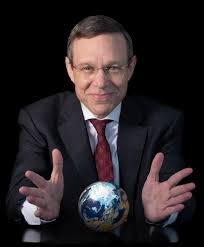
Could a professor find proof of alien technology? Dr. Avi Loeb is on that mission. With a Ph.D. in astrophysics, he leads Harvard’s Galileo Project, searching for extraterrestrial artifacts. A former chair of Harvard’s astronomy department with over 1,000 papers, Loeb’s research on cosmic phenomena like ‘Oumuamua has captured global attention.
At the briefing, Loeb proposed a $1 billion network of AI observatories to track UAP, offering benefits for science and security. He shared findings from a 2014 interstellar meteor expedition, suggesting possible artificial origins, and encouraged fearless UAP study. Loeb’s scientific curiosity invites everyone to ponder our place in the universe, making him a vital contributor.
Christopher Mellon: The Defense Expert Addressing UAP Risks

What if a Pentagon official warned our skies are vulnerable to UAP? Christopher Mellon raises that alarm. As Deputy Assistant Secretary of Defense for Intelligence (1999–2002), he managed global intelligence operations, including classified programs. A former Senate staffer, Mellon helped release the 2017 Pentagon UAP videos, sparking widespread interest.
On May 1, Mellon revealed that U.S. radars report no UAP despite pilot sightings, suggesting withheld data. He called for releasing videos and investigating these gaps, emphasizing national security concerns. Mellon’s insider perspective and push for accountability offer a critical lens on UAP, engaging those concerned about our defenses.
Kirk McConnell: The Congressional Staffer Supporting UAP Inquiry
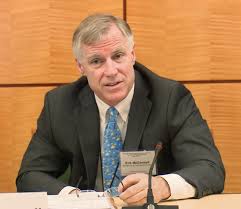
Who helps Congress tackle UAP secrets? Kirk McConnell is that connector. For 37 years, he served the Senate Armed Services and Intelligence Committees, organizing classified UAP briefings for lawmakers. Now advising the UAP Disclosure Fund, McConnell facilitates dialogue between hidden programs and public oversight.
At the briefing, he discussed challenges facing UAP whistleblowers, who risk their careers and safety, and advocated for legal protections to encourage disclosures. McConnell’s work behind the scenes ensures Congress can explore UAP truths, making him an essential guide for those new to the topic seeking government action.
Anna Brady Estes: The Innovator Seeing UAP’s Potential
(Could not find a public photo of Anna Brady Estes)
What if UAP could inspire the next tech breakthrough? Anna Brady Estes envisions that future. A founding partner of American Deep Tech, she advised the National Science Foundation and Small Business Administration, shaping innovation policy. As co-chair of the U.S. Space Economy Interagency Working Group, Estes supports entrepreneurs in biotech, energy, and AI, viewing UAP as a catalyst.
In the briefing, Estes explored how UAP-inspired technologies could advance medicine and communications, proposing significant investment to lead globally. Her forward-thinking ideas connect UAP to real-world innovation, appealing to those interested in technology’s next frontier.
Mike Gold: The NASA Leader Probing UAP Evidence

What if NASA’s data held UAP clues? Mike Gold believes it does. As Redwire’s president of civil space, he shaped NASA’s Artemis program, uniting 54 nations for lunar exploration. A 2023 NASA UAP Independent Study Team member, Gold advocates using space science to understand UAP.
At the May 1 briefing, Gold showcased NASA images, like lunar glows and Apollo anomalies, suggesting AI analysis of archives to uncover UAP evidence. He proposed pilot reporting systems and highlighted global UAP research competition. Gold’s expertise bridges space exploration and UAP, inviting newcomers to consider cosmic mysteries.
These introductions share the expertise and insights of the May 1, 2025, UAP briefing panelists, offering a window into a topic that touches science, security, and innovation. From Davis’s bold claims to Estes’s tech vision, they’re sparking a conversation worth joining. Learn more and stay curious about what’s in our skies.




 Ashes on Air
Thank you for taking the time to share your thoughts. Your voice is important to us, and we truly value your input. Whether you have a question, a suggestion, or simply want to share your perspective, we’re excited to hear from you. Let’s keep the conversation going and work together to make a positive impact on our community. Looking forward to your comments!