
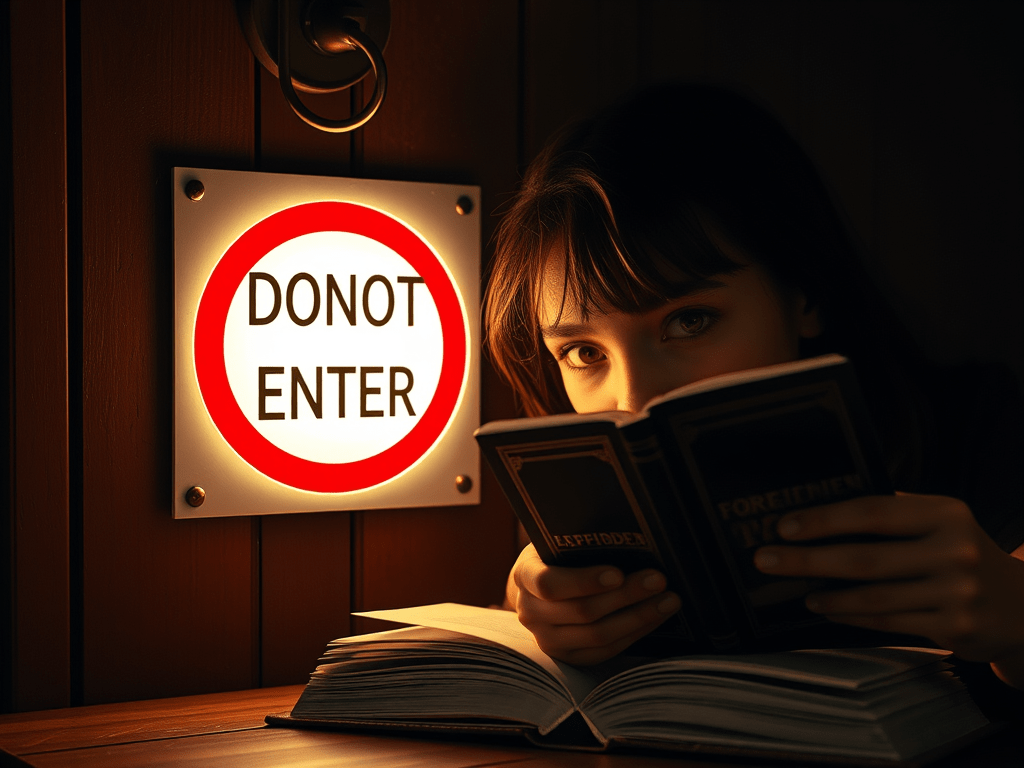
You’re reading this, aren’t you? Despite the title whispering “Don’t Read Me,” your curiosity won. Why do we ignore warnings like this? Human curiosity and the forbidden allure of defiance pull us in, making us click, read, and explore what’s off-limits. Let’s dive into why warnings spark our rebellion and what that reveals about us.
The Psychology of Ignoring Warnings
Why do we ignore warnings? It’s not just stubbornness—it’s psychology. Experts call it reactance: when someone restricts our freedom, we push back. A “Do Not Enter” sign tempts us to peek inside. A “banned book” becomes a must-read. The phrase “Don’t Read Me” is a psychological dare, and you took it. Studies show that restrictions trigger our brains to crave the forbidden, lighting up reward centers with anticipation.
This isn’t new. Myths like Pandora’s box or Eve’s apple show our timeless urge to defy limits. On Ashes on Air, we often explore what drives human behavior—curiosity is a big one.
The Forbidden Allure of “Don’t Read Me”
Why does a warning like “Don’t Read Me” work? It’s reverse psychology at its finest. By saying “don’t,” I’m inviting you to do the opposite. It’s a hook, but it’s also a shield. If this article unsettles you, I warned you, right? Think of it like a “Beware of Dog” sign: proceed at your own risk.
Ignoring warnings reflects our need to challenge boundaries. Whether it’s clicking a sketchy link or diving into controversial ideas, the forbidden allure is irresistible. But why? It’s about autonomy. We want to prove we’re in control, not the warning.
The Risks of Human Curiosity
Curiosity isn’t always harmless. Ignoring warnings can lead to trouble. In mythology, Icarus flew too high, his wings melting under the sun. Today, it’s clicking clickbait or wading into toxic comment sections. The internet is full of “don’t read me” traps—headlines designed to lure us into chaos.
Yet, we keep chasing. Every ignored warning is a bet on ourselves. We think we can handle what’s next. Sometimes we’re right. Sometimes we’re not. Learning when to heed a warning and when to defy it is key. For more on navigating online traps, check out our guide to digital literacy.
Why Did You Ignore the Warning?
So, why did you read this? Was it the challenge of “Don’t Read Me”? A spark of rebellion? Or just boredom? Whatever it was, your choice says something. You’re someone who tests limits, who questions “no.” That’s not a bad thing—it’s human.
This article won’t change your life. It’s just a mirror, reflecting your curiosity. Next time you see a “don’t,” you’ll pause, maybe smile, and decide whether to cross that line. You probably will.





 Ashes on Air
Thank you for taking the time to share your thoughts. Your voice is important to us, and we truly value your input. Whether you have a question, a suggestion, or simply want to share your perspective, we’re excited to hear from you. Let’s keep the conversation going and work together to make a positive impact on our community. Looking forward to your comments!