
April 9th, 2025
Imagine holding a piece of history in your hands—a fragile, thousand-year-old manuscript written in ancient Irish, its vellum pages whispering tales of saints, kings, and poets. These are Ireland’s treasures, the manuscripts that hold the heart of a nation’s culture, from the sacred words of the Cathach of St. Columba to the epic sagas in the Book of the Dun Cow. But time is not kind to these delicate pages. They’re crumbling, fading, and at risk of being lost forever. That’s why a quiet revolution has been underway for decades, one that’s bringing these ancient stories into the digital age to save them for future generations.
The digitization of Irish manuscripts is a massive effort led by institutions like the Dublin Institute for Advanced Studies, Trinity College Dublin, and the National Library of Ireland. It’s about more than just preservation—it’s about opening up Ireland’s heritage to the world. Here are the facts of this vital work, from its origins to its origins to impact.
A Race Against Time: Why Digitization Matters
Irish manuscripts date back as far as the 5th century, covering everything from early Christian Gospel books to medieval Gaelic literature. They’re written on vellum or paper, materials that don’t age well. Physical handling, humidity, and time have taken their toll. The 1922 Public Record Office fire during the Irish Civil War showed how easily history can vanish, destroying countless records. Today, institutions are racing to save what remains before it’s too late.
The Dublin Institute for Advanced Studies launched the Irish Script on Screen (ISOS) project in 1999, a game-changer in this effort. ISOS has digitized over 450 manuscripts, creating more than 80,000 high-resolution images, all available for free online through their platform at ISOS. Trinity College Dublin (TCD) has its own project, focusing on early medieval Gospel books like the Codex Usserianus Primus, dated to around 600 AD, making it one of the earliest surviving Irish manuscripts, and the Book of Mulling from the 8th century. The National Library of Ireland (NLI) has digitized over 1,300 Gaelic manuscripts, part of a collection spanning nearly a thousand years. Other institutions, like the Royal Irish Academy and the British Library, also hold Irish manuscripts, some of which have been digitized.
The Journey of Digitization: When and Where It’s Happening
The push to digitize Irish manuscripts started in the late 20th century. ISOS began in 1999 under the direction of Pádraig Ó Macháin at the Dublin Institute for Advanced Studies, initially working with Dublin City University and funded by the Irish Heritage Council. By 2004, it was fully managed by DIAS. TCD’s Early Irish Manuscripts Project was active around 2015-2016, supported by a grant from Bank of America Merrill Lynch Art Conservation Project, with digital versions of manuscripts like the Book of Dimma launched in 2016. The NLI’s digitization efforts are ongoing, with over 140,000 items (780,000 images) already online.
Most manuscripts are housed in Ireland at TCD, the NLI at 2/3 Kildare Street, Dublin, and the Royal Irish Academy. TCD holds over 200 medieval and early modern Irish language manuscripts, while the NLI has over 1,300 Gaelic manuscripts. Some manuscripts are abroad, like the Harley MS 546, a 1459 medical tract in Irish and Latin, held by the British Library. ISOS collaborates with 28 institutions, including the National Library of Scotland, to bring these scattered pieces of heritage together digitally.
How It’s Done: Technology at Work
Digitizing a manuscript isn’t just about snapping a photo. It requires precision to protect these fragile artifacts. ISOS uses a large format 5/4 Sinar camera with a Phase One IQ180 digital back, mounted on a Grazer conservation-grade book cradle to minimize damage. Before imaging, manuscripts are conserved to address tears or binding issues—the Codex Usserianus Primus, for example, has 182 folios but has suffered significant damage over time, with its leaves now measuring 27 x 19 cm after being trimmed and mounted on paper guards, per TCD’s History of Art research. Advanced techniques like multi-spectral imaging reveal faded or hidden text, as noted in Pádraig Ó Macháin’s 2022 paper on spectroscopy in Peritia. The images are then uploaded to online platforms with zoomable interfaces and metadata, making them accessible for detailed study.
What’s Been Digitized: Notable Manuscripts
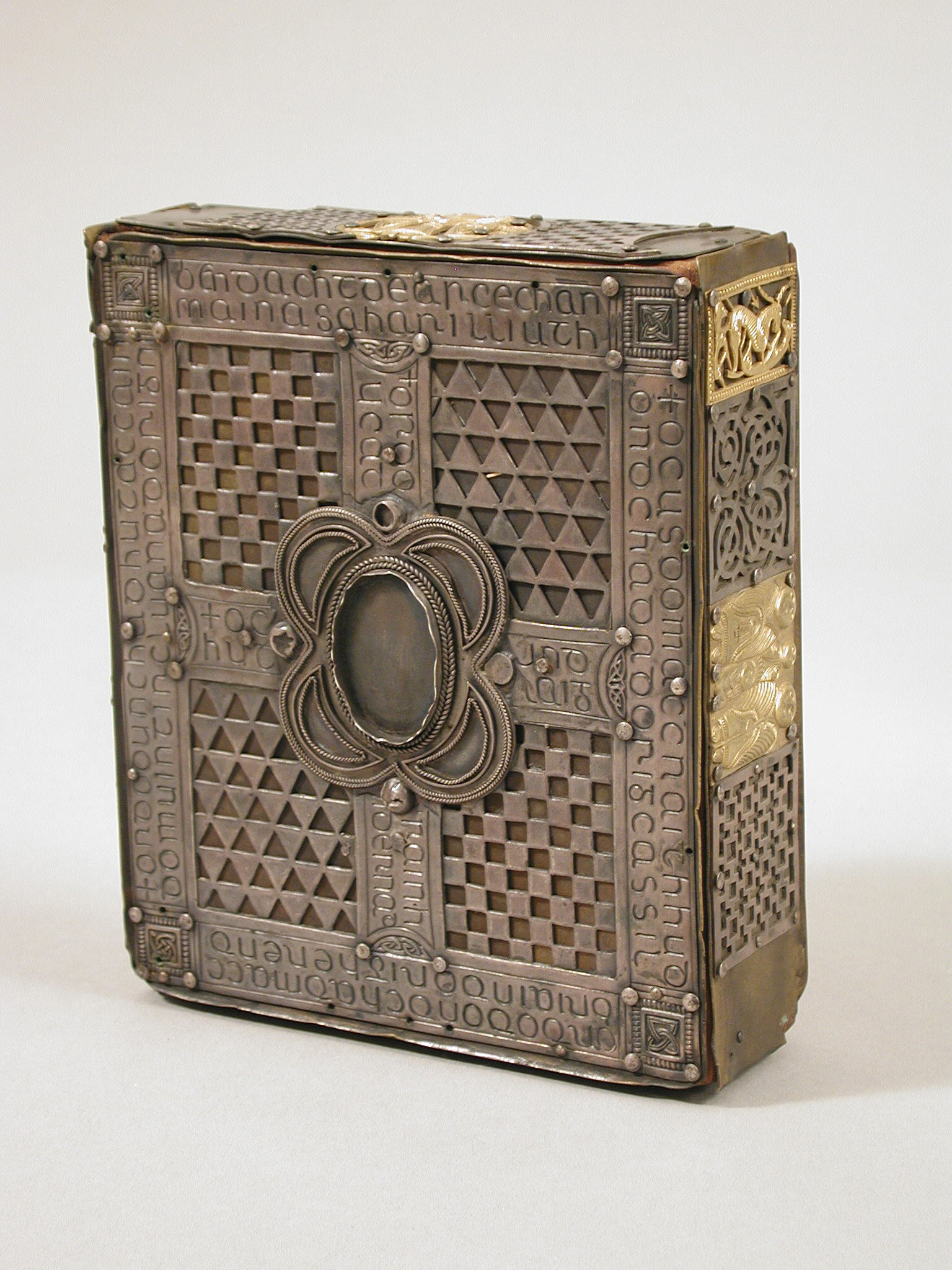
The digitized collection spans centuries and genres. ISOS has preserved Leabhar na hUidhre (Book of the Dun Cow), from the late 11th or early 12th century, and the Cathach of St. Columba, one of the oldest Irish manuscripts, containing the Gallicanum Psalter. The Stowe Missal, another early text, has been digitally reunited with its shrine. TCD’s project includes the Book of Kells, Codex Usserianus Primus, which contains a Latin text of the Gospels written in an early Irish majuscule script and is notable for its simplicity with limited decoration (two red initials and red dots around letters), the Book of Mulling, the Book of Dimma, and the Garland of Howth, all early Christian Gospel books. The NLI’s collection features Gaelic manuscripts from the 14th century onward, covering literature, language revival, and dinnseanchas (place-law), as well as landed estate papers dating back to the 11th century.
The Goals: Preserving History, Sharing Knowledge
The digitization effort has clear objectives. It preserves fragile manuscripts by reducing physical handling—some, like the Codex Usserianus Primus, are too delicate to be touched often, with its vellum leaves showing signs of wear and damage over the centuries. It makes these texts accessible to anyone with an internet connection, supporting researchers who can’t travel to Dublin and sharing Ireland’s heritage with the public, as seen with ISOS’s 80,000 free images. It also enhances research, with techniques like multi-spectral imaging revealing hidden details and digital platforms allowing cross-referencing. Finally, it strengthens cultural identity, virtually reuniting manuscripts scattered across the globe and showcasing Ireland’s history to a global audience, aligning with advocacy efforts for cultural preservation.
Challenges and the Road Ahead
Digitization isn’t without challenges. High-end imaging equipment is expensive, and funding remains a hurdle. The fragility of some manuscripts requires meticulous conservation before they can be scanned. While platforms like ISOS use the International Image Interoperability Framework (IIIF), not all institutions align with these standards, complicating integration. Looking forward, advancements like AI for text recognition could further enhance accessibility. The Irish Manuscripts Commission has digitized its backlist, adding publications like Micheline Walsh’s Spanish Knights of Irish Origin in 2024, showing parallel efforts in digital preservation.
Sources
- Dublin City University. https://www.dcu.ie/
- Heritage Council. https://www.heritagecouncil.ie/
- Irish Script on Screen (ISOS). https://www.isos.dias.ie/
- Irish Script on Screen (ISOS) Project History. https://www.isos.dias.ie/english/index.html?lang=en
- National Archives of Ireland: The Irish Civil War. https://www.nationalarchives.ie/topics/Civil_War/civilwar.html
- National Library of Ireland: Digitisation Programme. https://www.nli.ie/collections/our-collections/manuscripts
- National Library of Ireland: Homepage. https://www.nli.ie/en/homepage.aspx
- National Library of Scotland. https://www.nls.uk/
- Ó Macháin, Pádraig. (2022). “Spectroscopy and Multi-Spectral Imaging in Irish Manuscripts.” Peritia. https://www.brepolsonline.net/loi/per
- Royal Irish Academy: Cathach of St. Columba. https://www.ria.ie/cathach-psalter-st-columba
- Royal Irish Academy: Homepage. https://www.ria.ie/
- The British Library: Harley MS 546. https://www.bl.uk/manuscripts/FullDisplay.aspx?ref=Harley_MS_546
- The British Library: Homepage. https://www.bl.uk/
- The Dublin Institute for Advanced Studies. https://www.dias.ie/
- The Irish Manuscripts Commission. https://www.irishmanuscripts.ie/
- Trinity College Dublin: Gospel Books. https://www.tcd.ie/History_of_Art/research/gospel-books.php
- Trinity College Dublin: Homepage. https://www.tcd.ie/
- Trinity College Dublin: Manuscripts & Archives. https://www.tcd.ie/library/manuscripts/collections/early-irish.php



 Ashes on Air
Thank you for taking the time to share your thoughts. Your voice is important to us, and we truly value your input. Whether you have a question, a suggestion, or simply want to share your perspective, we’re excited to hear from you. Let’s keep the conversation going and work together to make a positive impact on our community. Looking forward to your comments!