
April 9th, 2025
The waters of Lake Michigan, a lifeline for millions, are under siege. Asian carp—bighead, silver, black, and grass varieties—have been creeping closer for years, now just 47 miles away in the Dresden Island Pool of the Des Plaines River. These invasive fish, introduced from Asia in the 1960s to control algae in aquaculture, have become a nightmare for the Great Lakes. They grow up to 100 pounds, produce over 1 million eggs per female, and devour plankton, leaving native species like walleye and yellow perch with little to eat. Silver carp leap up to 10 feet out of the water, posing a safety risk to boaters. The stakes are high: the Great Lakes fishing industry, worth $7 billion and supporting 75,000 jobs, and a $16 billion boating industry hang in the balance.
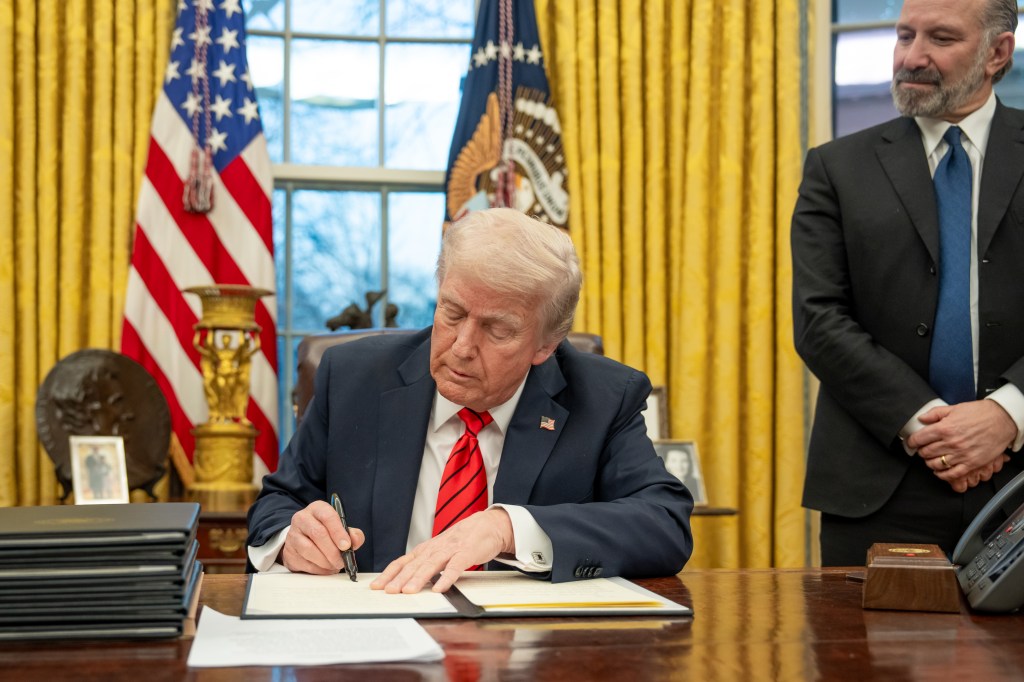
On April 9, 2025, President Donald Trump took action, signing an executive order in the Oval Office to tackle Asian carp and other invasive species in Lake Michigan. Michigan Governor Gretchen Whitmer and Michigan House Speaker Matt Hall stood by as Trump spoke, emphasizing the need to “save Lake Michigan.” He described the carp as “very powerful fish” that “eat everything in the way, including the other fish” and “jump out of the water” at fishermen, disrupting recreational boating. This article lays out the facts of Trump’s order, the Asian carp threat, and the challenges ahead, based on primary, credible sources.
The Asian Carp Invasion: A Growing Menace
Asian carp have been a problem for decades. They’ve been spotted closer and closer to Lake Michigan over the years. In 2010, a bighead carp was captured in Lake Calumet, just 6 miles from the lake. In 2017, a silver carp was caught below the T.J. O’Brien Lock and Dam, 9 miles away. By 2022, another silver carp was found in Lake Calumet, 7 miles from Lake Michigan, above the electric dispersal barriers meant to stop them. In 2015, silver carp larvae were discovered in the Dresden Island Pool, showing they’re reproducing 47 miles from the lake. In 2023, silver carp eDNA was detected in the St. Joseph River near Benton Harbor, Michigan, a Lake Michigan tributary, marking the first such finding in Michigan’s Great Lakes waters outside Maumee Bay.
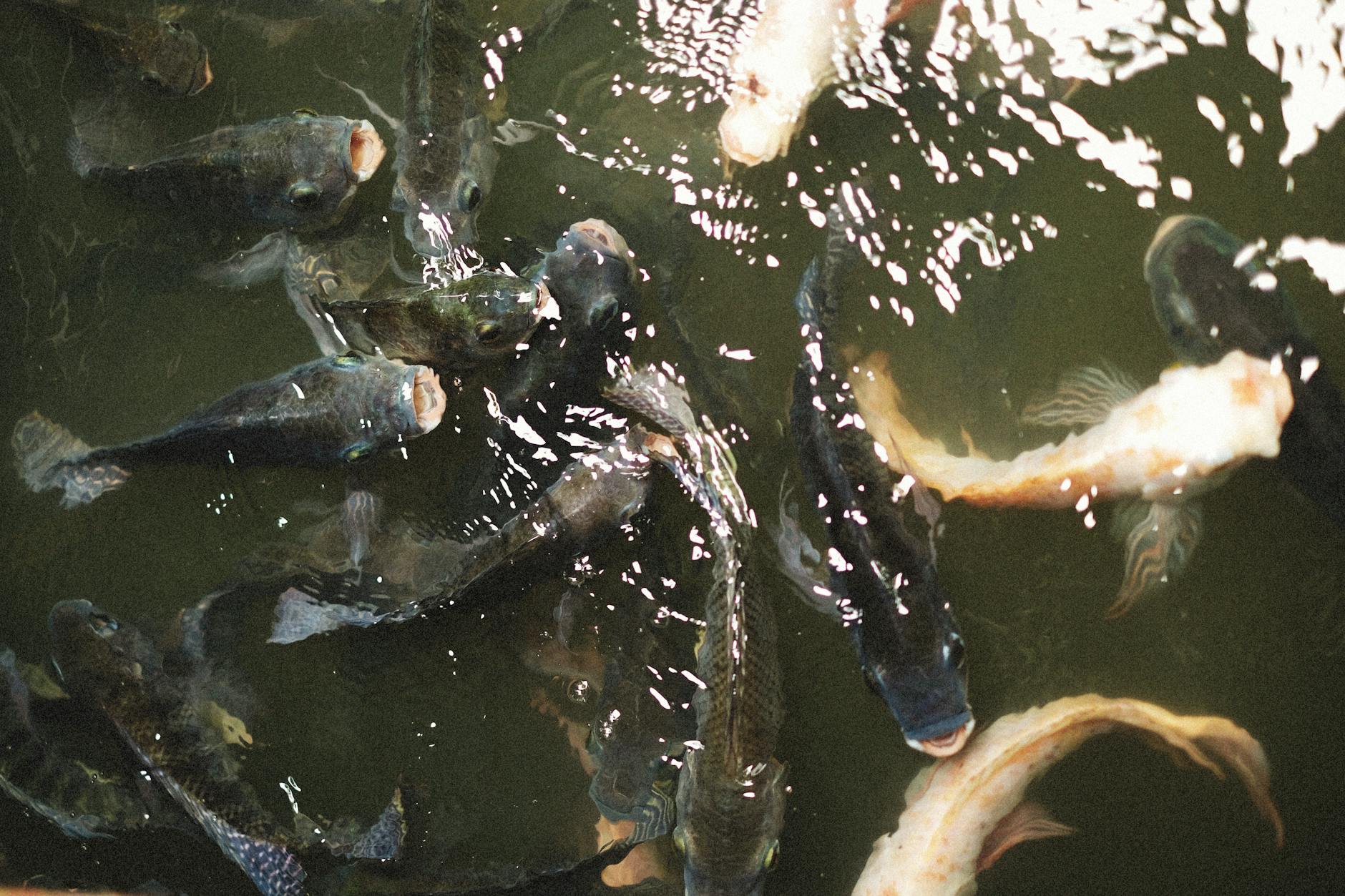
The Illinois Department of Natural Resources has been working to curb the spread, removing over 1 million pounds of carp annually from the Illinois River, cutting the Dresden Island Pool population by 95% since 2012. But the carp keep pushing closer, threatening an ecosystem that supports millions of dollars in economic activity.
What’s at Risk: Lake Michigan’s Ecosystem and Economy
The numbers tell a stark story. Asian carp can outcompete native fish for food, potentially disrupting the Great Lakes food web. A 2019 University of Michigan study in Freshwater Biology found that bighead carp can survive on quagga mussel fecal pellets, making Lake Michigan’s 22,000 square miles a suitable habitat, especially near river mouths like the St. Joseph River. A 2020 University of Michigan study in Biological Invasions revealed that Lake Michigan’s waters, warming at 0.5°F per decade, double the suitable habitat for bighead carp in spring.
The economic impact could be devastating. The Great Lakes fishing industry generates $7 billion annually, supporting 75,000 jobs. The boating industry adds another $16 billion. If Asian carp establish a reproducing population in Lake Michigan, these industries could collapse, affecting livelihoods across the region.
Trump’s Executive Order: A New Push to Stop the Carp
On April 9, 2025, Trump signed an executive order in the Oval Office, with Michigan Governor Gretchen Whitmer and Michigan House Speaker Matt Hall present. Trump highlighted the carp’s destructive nature, noting their impact on both the ecosystem and recreational boating. The order directs federal agencies to address Asian carp and invasive species in Lake Michigan, likely involving funding or policy support for projects like the Brandon Road Interbasin Project. The full text of the order is not yet available in the Federal Register.
The Brandon Road Project: A Critical Barrier
The Brandon Road Interbasin Project, located near Joliet, Illinois, 40 miles from Lake Michigan, is designed to stop carp from reaching the lake. It includes electric barriers, acoustic deterrents, air bubble curtains, and a flushing lock to block carp while allowing ship traffic. The project costs $1.15 billion, with $274 million in federal funding, including $226 million from the Bipartisan Infrastructure Law, and $114 million from Illinois and Michigan.
The project has faced delays. On June 30, 2024, Michigan signed an agreement with the U.S. Army Corps of Engineers and Illinois to cosponsor the project. Construction was set to begin in October 2024 but was halted on February 10, 2025, by Illinois Governor JB Pritzker. Pritzker cited concerns over the Trump administration’s $274 million federal funding commitment, noting that $117 million in federal grants for the Illinois DNR were tied up, affecting 70 infrastructure projects. In late January 2025, the Trump administration issued a memo freezing federal grants and loans for review, which was later rescinded.
Trump’s Track Record on Asian Carp Funding
Trump’s history with Asian carp funding has been inconsistent. In 2020, he promised to protect the Great Lakes from carp during a speech in Warren, Michigan, but his proposed budget omitted funding for the Brandon Road project. In 2017, the Trump administration delayed a U.S. Army Corps of Engineers plan for Brandon Road. On March 4, 2025, Trump addressed Congress, announcing the termination of the Green New Deal, withdrawal from the Paris Climate Accord, and ending of Biden’s environmental restrictions, including the electric vehicle mandate. He also created the Department of Government Efficiency (DOGE), led by Elon Musk, to cut federal spending, targeting programs like a $250,000 vegan climate initiative in Zambia.
Sources
- Associated Press. (2025, February 12). Pritzker Delays $1.2B Invasive Carp Project Over Concerns Trump Won’t Cover Federal Share. https://www.ap.org/
- Chicago Sun-Times. (2025, February 10). Pritzker Halts Joliet Great Lakes Carp Project, Citing Trump Withholding Federal Funds. https://chicago.suntimes.com/politics/donald-trump/2025/02/10/pritzker-joliet-great-lakes-carp-project-trump-withholding-federal-funds
- Detroit Free Press. (2017, February 28). Sources: Trump Administration Delays Asian Carp Plan. https://www.freep.com/
- Great Lakes Fishery Commission. (2025). Asian Carp Proximity to Lake Michigan: Current Status. https://www.glfc.org/
- Illinois Department of Natural Resources (IDNR). (2025). Asian Carp Removal Efforts in the Illinois River. https://www2.illinois.gov/dnr/Pages/default.aspx
- Illinois-Indiana Sea Grant. (2025). Safety Recommendations for Boating in Asian Carp-Infested Waters. https://www.iiseagrant.org/
- Michigan Department of Natural Resources (MDNR). (2025). Invasive Carp. https://www.michigan.gov/dnr
- Michigan Public. (2020, February 13). Trump Won’t Fund Asian Carp Barrier, But Approves Money for Soo Locks. https://www.michiganpublic.org/
- Trump, D. J. (2025, March 4). Address to a Joint Session of Congress. Transcribed by the Associated Press. https://www.fox61.com/article/news/nation-world/transcript-of-t…ess-to-congress/507-89e08931-e677-4575-3e16-00ct46af1600
- U.S. Army Corps of Engineers (USACE). (2025). Brandon Road Lock and Dam Project Update. https://www.mvr.usace.army.mil/Missions/Environmental-Protection-and-Restoration/Brandon-Road/
- U.S. Fish and Wildlife Service (USFWS). (2023). Asian Carp eDNA Testing in the St. Joseph River. https://www.fws.gov/
- University of Michigan. (2019). Freshwater Biology: Asian Carp Diet Flexibility in Lake Michigan. https://umich.edu/
- University of Michigan. (2020). Biological Invasions: Climate Warming and Asian Carp Habitat in Lake Michigan. https://umich.edu/



 Ashes on Air
Thank you for taking the time to share your thoughts. Your voice is important to us, and we truly value your input. Whether you have a question, a suggestion, or simply want to share your perspective, we’re excited to hear from you. Let’s keep the conversation going and work together to make a positive impact on our community. Looking forward to your comments!