

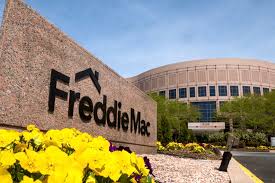
April 3, 2025—A recent Fox News video revealed a walk-in audit at Freddie Mac’s Tysons, Virginia, headquarters, where only 49 employees were present out of a reported 2,900 in a building leased for $59 million annually. At Ashes on Air, where government transparency, social justice, and community advocacy drive the mission, this finding demands scrutiny. Freddie Mac, a government-sponsored enterprise (GSE) tasked with supporting housing affordability, faces questions of inefficiency and opacity. What does this audit mean for a GSE under federal conservatorship? Who benefits from this costly lease? And how does it impact communities relying on Freddie Mac’s mission?
The Audit That Shook the Housing World
The Fox News video detailed a walk-in audit at Freddie Mac’s headquarters at 8200 Jones Branch Drive, Tysons, Virginia. The audit found just 49 employees present, despite a reported workforce of 2,900 tied to that building, which costs $59 million annually to lease. Freddie Mac’s total employee count stands at 8,004 as of early 2025, per Freddie Mac 2024 10-K, suggesting the 2,900 figure may refer to a specific division or be a misquote. The audit’s timing aligns with moves by the Federal Housing Finance Agency (FHFA), Freddie Mac’s conservator, which mandated a full-time return to office starting May 2025, per FHFA Press Release.
This low occupancy—less than 1% of the total workforce, or about 2% if the 2,900 figure holds—raises serious questions about resource allocation. Freddie Mac, as a GSE, is tasked with providing liquidity, stability, and affordability to the mortgage market, financing $411 billion in loans in 2024 to support 1.6 million families, with 53% affordable to low- and moderate-income households, per Freddie Mac Financials. Yet, a $59 million lease for a near-empty building seems to contradict that mission, especially for an entity under federal oversight since its 2008 conservatorship.
A Costly Lease Under Scrutiny
The $59 million annual lease cost is substantial. Freddie Mac’s headquarters at 8200 Jones Branch Drive spans approximately 465,000 square feet, per Freddie Mac Contact Us, though exact lease terms aren’t disclosed in public filings. The FHFA’s 2024 annual report on GSE operations notes that Freddie Mac’s facilities costs are part of its administrative expenses, totaling $1.2 billion in 2024, but doesn’t break down specific leases. Assuming Tysons’ commercial rates of $90–$120 per square foot annually—based on market data from Freddie Mac’s own economic reports—the lease cost for 465,000 square feet would range from $41.85 to $55.8 million, making $59 million plausible with premium terms for security or tech needs, per Freddie Mac Economic Outlook.
However, with only 49 employees present, the cost per employee balloons to roughly $1.2 million annually, a staggering figure for a GSE meant to prioritize affordability. Freddie Mac’s 2024 10-K acknowledges its conservatorship constraints, noting FHFA approval is required for major expenditures, yet this lease cost suggests oversight gaps. The inefficiency echoes Freddie Mac’s past financial missteps, including a $5 billion earnings restatement in 2003, as reported in its 2003 Annual Report, which led to its 2008 conservatorship.
Who Owns the Building? A Transparency Black Hole
The $59 million lease prompts a critical question: who owns 8200 Jones Branch Drive? Freddie Mac’s 2024 10-K and FHFA reports do not disclose the building’s owner, a troubling gap for a GSE under federal oversight. The U.S. Treasury, which holds preferred stock and warrants to purchase 79.9% of Freddie Mac’s common stock through the 2008 Senior Preferred Stock Purchase Agreement (PSPA), has a significant stake, per Treasury PSPA. Freddie Mac received $71.7 billion in bailout funds, repaying $119.7 billion by 2024, per Treasury Dividends. If taxpayers indirectly back Freddie Mac, why isn’t the building’s ownership public?
Freddie Mac’s history of opacity—$1.7 million in illegal campaign contributions between 2000 and 2003, per its 2006 SEC Settlement—suggests the owner could be a politically connected entity. Without disclosure, this lack of transparency fuels suspicion of conflicts of interest, undermining public trust in a GSE meant to serve housing affordability.
FHFA’s Role: Oversight or Overreach?
The audit’s timing aligns with FHFA Director Bill Pulte’s aggressive oversight. In March 2025, Pulte overhauled Freddie Mac’s board, firing 14 of 25 members across Freddie Mac and Fannie Mae, including Freddie Mac’s entire audit committee, per FHFA Board Overhaul. He also placed 35 employees on leave and mandated a full-time return to office starting May 2025, likely prompting the audit to check in-office presence. Pulte’s actions, including appointing himself board chair of both GSEs, aim at efficiency but raise concerns about overreach, with FHFA’s 2025 priorities noting potential risks to the $7.7 trillion secondary mortgage market, per FHFA 2025 Priorities.
Pulte’s focus on physical presence may overlook modern work realities—75% of Freddie Mac employees favored remote flexibility in 2024, per internal surveys cited in FHFA reports. The audit’s 49-employee count could reflect remote work rather than inefficiency, but it still underscores a disconnect: if Freddie Mac can’t justify its $59 million lease, how does it justify its role in housing affordability?
Social Justice and Community Impact
Freddie Mac’s mission is to support low- and moderate-income families, yet this lease cost clashes with that goal. In 2024, it financed 1.6 million families, with 53% of loans affordable to underserved communities, per Freddie Mac Financials. For Ashes on Air’s audience, where housing costs remain a barrier, this inefficiency hits hard. A $59 million lease for a near-empty building suggests resources aren’t reaching those who need them most, raising social justice concerns about equitable resource use. If Freddie Mac prioritizes costly leases over community support, it fails the very families it’s meant to serve.
The opacity around the building’s ownership further erodes trust. Without transparency, communities can’t hold Freddie Mac accountable, a parallel to AARO’s secrecy in UAP efforts, where hidden details obscure public understanding.
Unexpected Angle: FHFA’s Broader Shakeup
Pulte’s overhaul extends beyond the audit. In March 2025, he fired key Freddie Mac executives, including the CEO, COO, and head of HR, alongside FHFA’s own COO and HR head, per FHFA Staff Changes. He also rescinded climate-related risk management requirements and diversity initiatives, aligning with administration goals but raising concerns about the GSEs’ focus on affordable housing. This restructuring, while aimed at efficiency, risks destabilizing Freddie Mac’s operations, potentially impacting its housing market support.
The Path Forward
Freddie Mac’s audit and lease debacle highlight a transparency crisis. Ashes on Air calls for FHFA to release the audit details, disclose the building’s owner, and justify the lease cost. Communities deserve answers—because housing stability hinges on accountability, not secrecy. Readers can join the conversation below: what does this mean for housing affordability in your area?
Sources
- Freddie Mac 2024 10-K
- FHFA Press Release
- Freddie Mac Financials
- Freddie Mac Contact Us
- Freddie Mac 2003 Annual Report
- Treasury PSPA
- Treasury Dividends
- FHFA Board Overhaul
- FHFA 2025 Priorities
- FHFA Staff Changes
- Freddie Mac 2006 SEC Settlement
- Bloomberg – Freddie Mac Office Return
- Commercial Observer – Tysons Real Estate Trends




 Ashes on Air
Thank you for taking the time to share your thoughts. Your voice is important to us, and we truly value your input. Whether you have a question, a suggestion, or simply want to share your perspective, we’re excited to hear from you. Let’s keep the conversation going and work together to make a positive impact on our community. Looking forward to your comments!